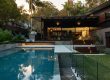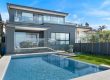
While a swimming pool can transform your backyard, the pool is just one element of the design.
The paving, planting, fencing, seating, shade and connection to the house all affect the appearance and use of the space. Get those elements right and the pool feels like it has always belonged there. Get them wrong and even a beautifully finished pool can leave the rest of the backyard feeling awkward.
We have designed swimming pools and surrounding landscapes for small urban blocks, sloping properties, family gardens and homes with existing pools that needed a complete rethink. One thing we have learnt is that there is no single design that works everywhere.
Every block has its own challenges. Most importantly, each family has a different use for their backyard.
The following swimming pool landscaping ideas are designed to get you thinking beyond the shape of the pool and how the entire outdoor area can work.
The first step is to design One Connected Outdoor Living Area.
The most common error we see is that the pool, landscaping and entertaining area are all considered separate projects.
The pool builder determines the position of the pool. The landscaper then works around what is left. An outdoor kitchen, cabana or seating area is added later if there is enough room.
This approach can work, but it rarely produces the best result.
The first step is to consider the whole backyard as an outdoor living space. Think about the route from the house to the pool, where people will sit, how food and drinks will be brought outside, and where parents can sit and supervise children.
The entertaining area doesn’t have to be big. It just needs to be positioned properly.
Having a built-in barbecue or outdoor kitchen near the pool can minimize the amount of time people have to spend moving back and forth between the backyard and the house. A dining area set slightly back from the water might be more comfortable, and casual seating near the pool will provide a place for swimmers to sit.
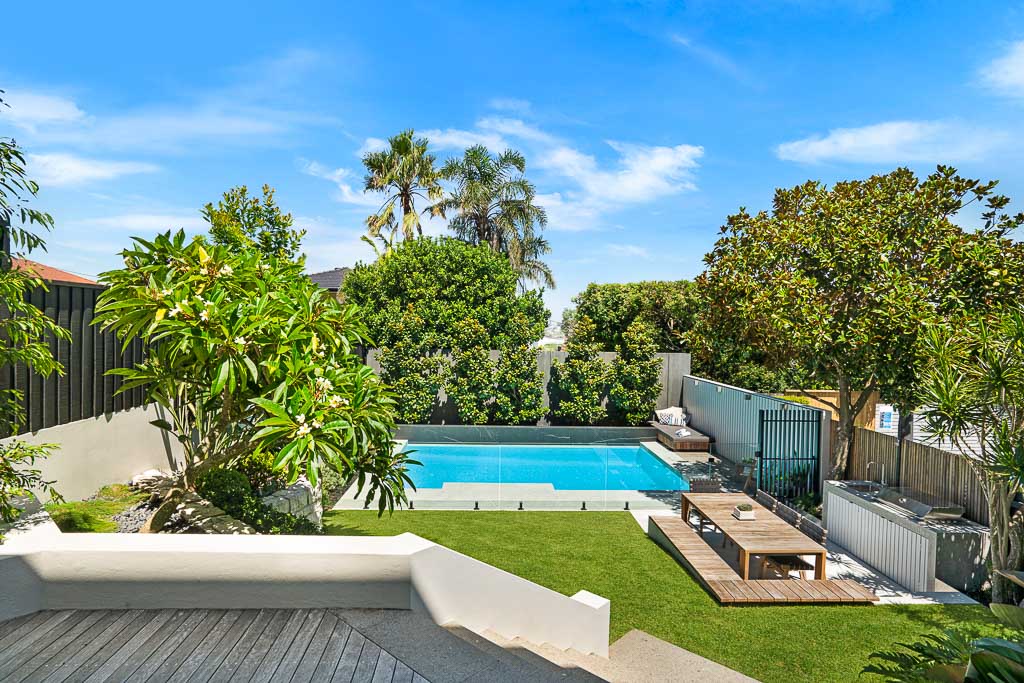
At our North Curl Curl project, the swimming pool, sunken lounge, built-in seating and outdoor kitchen were all designed as parts of the same entertaining space. Although the backyard was relatively compact, connecting these functions helped the area feel much more generous.
Good pool landscaping should make the backyard easier to use, not simply fill the space around the water.
 Use Planting to Soften the Pool Surrounds
 Use Planting to Soften the Pool Surrounds
There are a lot of hard materials in a backyard when you have a swimming pool.
There is the pool shell, coping, paving, fencing and often retaining walls or stairs. Without enough planting, the area can start to feel bare and overly constructed.
These surfaces are softened by plants and make the pool more at home in the garden. They can also enhance privacy, conceal boundaries and provide a more serene view from the pool and home.
The key is choosing the right plants for the position.
Plants near a pool might have to endure reflected heat, full sun and splashing. It is also wise to not use species that shed leaves, flowers, fruit or fine debris continuously into the water.
We don’t like to choose a wide variety of plants, we tend to stick to a more limited palette. Repeating a few suitable varieties creates a calmer result and usually makes maintenance simpler.
In a modern pool, green planting can be used to break up clean architectural lines while not overpowering the garden. For a more relaxed pool area, layered planting with different heights and foliage textures can create a lush, established appearance.
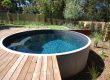
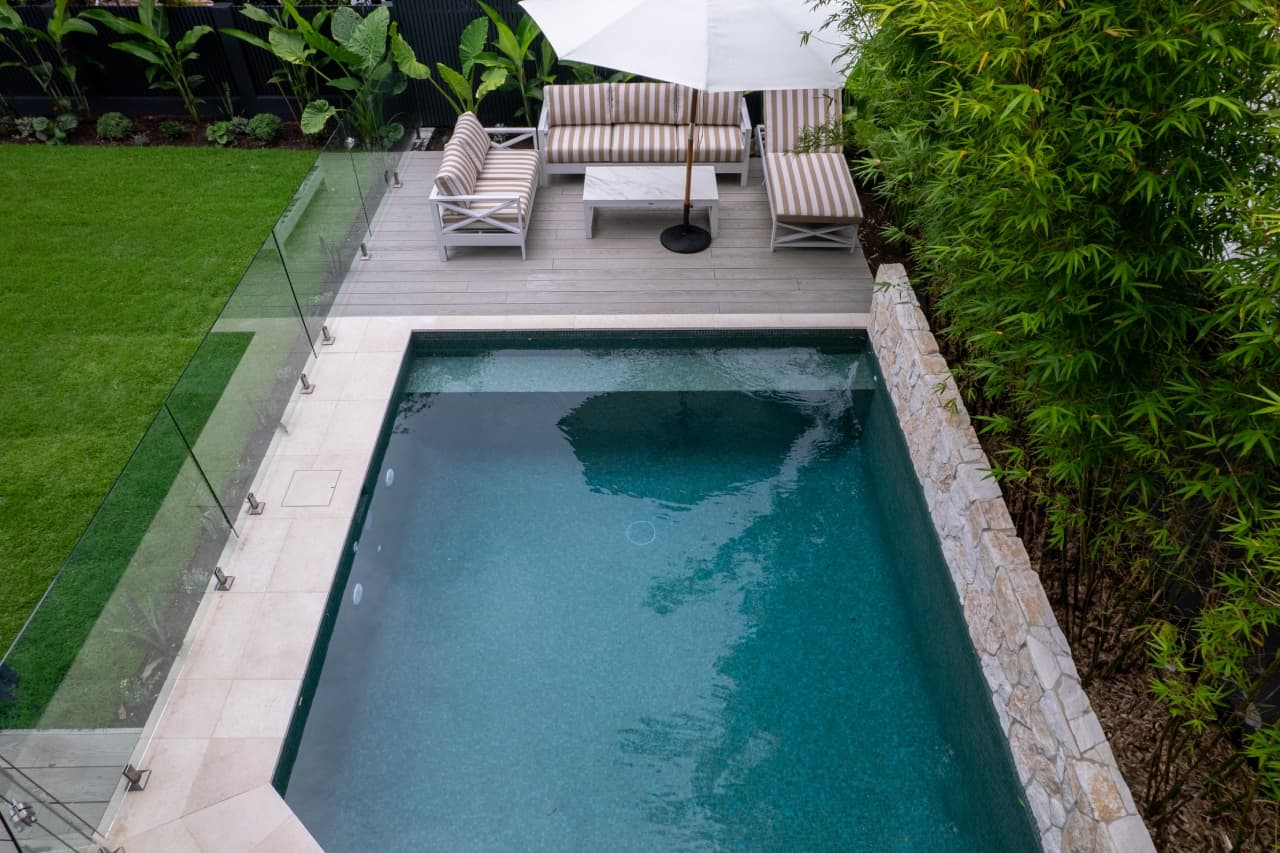
In Seaforth, we designed a small plunge pool, which was softened by tropical planting and bamboo screening, and stone feature wall and boundary. The planting was designed to create a relatively small space that felt more private, but did not consume too much of the available space.
The best pool planting ideas should look good from outside the water and from within it.
Create Privacy without Boxing in the Backyard
One of the initial questions that comes up in numerous pool design projects is privacy.
The problem is to provide adequate screening from adjacent houses while avoiding the appearance of enclosing the pool area with high, solid walls.
Planting is often the most natural solution, but it needs to be planned carefully.
A single row of small screening plants may look neat when first installed, but it may take years to provide useful coverage. However, plants that grow too fast may be hard to manage or require more space than anticipated.
Layered planting usually creates a better result. The taller screening plants can be used along the edge and the smaller shrubs and groundcovers can be used at the bottom of the garden bed.
Pleached trees can also be effective for screening, if this is required at a higher level rather than planting dense at the base. They provide a more architectural form and can be useful where neighbouring windows overlook the backyard.
Privacy structures can also form part of the design. Selected views can be blocked by timber battens, masonry feature walls, pergolas and cabanas, while still letting light and air into the pool area.
The important thing is to identify exactly where privacy is needed. When a single tree or structure can solve the problem, screening the entire boundary may not be required.
Choose Pool Paving that Connects with the House
Pool paving has a major influence on the finished appearance of the backyard.
Rather than selecting a material because it looks good in a showroom, look at the materials and colours already used throughout the property.
The paving does not need to be an exact match to the house, but it should relate to it.
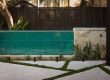
Natural stone can be used to create texture and can be used in modern and traditional homes. Large-format paving creates a cleaner appearance, while crazy paving brings more variation and can work particularly well around curved or irregular pool shapes.
Timber decking can add warmth and help to make a pool area less formal. It can also be used to control level changes, provide seating or fill in spaces where paving is not the most appropriate solution.
Polished or off-form concrete can work well in contemporary design, especially if it is also used in other parts of the house or landscape.
Whichever material you choose, consider how it will perform as well as how it looks. Pool surrounds need to be comfortable underfoot, suitable for wet areas and practical to maintain.
We also suggest restricting the number of finishes. Using too many different stones, tiles, timbers and colours can make the pool area feel disconnected.
A smaller selection of well-chosen materials will generally give the design more consistency and allow the planting and water to become the focus.
 Make a Small Pool Feel Generous
 Make a Small Pool Feel Generous
A small backyard does not automatically require a disappointing pool.
A well-designed plunge pool can offer a family all the amenities they require and still allow for seating and planting or lawn.
The important thing is to be realistic about the use of the pool.
If the primary goal is to cool off, relax and provide a place for the kids to swim, a smaller pool might be more beneficial than a longer pool that takes up nearly the entire backyard.
In limited spaces, simple geometric forms can be effective due to their efficient use of space. Built-in steps or a submerged bench can provide somewhere to sit without adding a separate spa.
The pool may also be set up on one side of the backyard instead of in the middle. This may leave a wider, more usable area for entertaining instead of two narrow pathways on either side of the pool.
Another great small backyard pool landscaping tip is the built-in seating. A bench that is built into a retaining wall or boundary can offer seating without the need for free-standing furniture.
The pool at North Curl Curl was positioned as close as possible to the maximum width of the block, but still had narrow garden beds for screening and softness. The remaining space was used efficiently by the surrounding built-in elements.
The aim is not to fit the largest pool possible. It’s about making the best backyard you can.
Add Shade and Comfortable Poolside Seating
A pool area should be fun even if no one is in the pool.
People tend to go inside between swims if there is no comfortable seating or shade. This can make the backyard less useful during the hottest parts of the day.
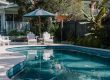
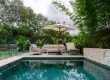
Shade may be provided by a cabana, pergola, large umbrella or strategically placed tree. The right option will depend on the size of the backyard, the direction of the sun and how permanent you want the structure to be.
A cabana can provide a clear outdoor space for cooking, dining and relaxing. It may also provide privacy from neighbouring properties.
A smaller backyard might require a cantilever umbrella or a small pergola. These choices can offer helpful shade without taking over the pool space.
Think about the type of seating as well.
Sun lounges are great for unwinding, but surprisingly take up a lot of space. Where space is limited, a built-in bench might be more useful. Deep seating is good under a cabana, and casual chairs can be shifted as per the time of the day.
The furniture is as important as the location. Seating should be positioned to have a clear view of the pool, especially in family backyards, but not block the main pathway between the house and garden.
Think about how people will actually use the pool, not how it will appear in photos.
Use Levels to Your Advantage
Backyards that slope back are considered challenging for swimming pools, but level changes can make for some of the most interesting designs.
A pool may be installed at a mid-level between the house and the lower garden. This may help connect areas that would otherwise feel separated.
Retaining walls can be used as seating, raised garden beds or stone clad features, not just as a structure. Stairs can create a strong visual connection through the backyard, while an elevated pool may take advantage of views that would be lost at ground level.
Wet edges and infinity edges work well if the property has an open outlook. But they should react to the site and not just be added as a feature.
The edge must have something to attach to, whether it be bushland, water, a distant skyline or a lower garden.
At our Northbridge project, the pool was positioned within a sloping backyard between an upper level and a large lower lawn. A stone-clad upturn wall served as a pool feature and a retaining wall for a raised garden bed. This enabled the structure to be incorporated into the landscape design.
A sloping block can be a challenge to work with, but the levels can add depth and character to a flat site.
Retain Some Lawn or Flexible Garden Space
A swimming pool doesn’t have to take up the whole backyard.
Many families value keeping a section of lawn as much. It offers children a place to play, space for pets and a more harmonious visual contrast to the paving and water.
The lawn doesn’t have to be big. A smaller, level section is often more useful than a larger sloping or awkwardly shaped area.
Consider other activities that will take place in the backyard before determining the pool size. This can be children’s play equipment, a dog area, informal seating or just an open space that helps to make the garden feel less crowded.
One of our small backyard projects had the pool area planned to maximize swimming space while maintaining lawn. In a more recent Northern Beaches project, an upper level lawn was added above the pool and retaining walls to preserve a sense of space.
Balance is important. A bigger pool might seem like a good idea on a plan, but if it takes away all the other good features of the garden, it may not be the best option.
 Work with the Character of the Property
 Work with the Character of the Property
Not all pools have to be rectangular, white and covered with large format paving.
The most successful designs are those that are based on the architecture and the surrounding landscape before determining the design of the pool.
Natural stone, less fencing and more detailed planting may be appropriate for a traditional home. A modern home might require more streamlined lines, limited materials and fewer plants.
Other features such as existing walls, rock outcrops, mature trees and established garden features can also inform the design.
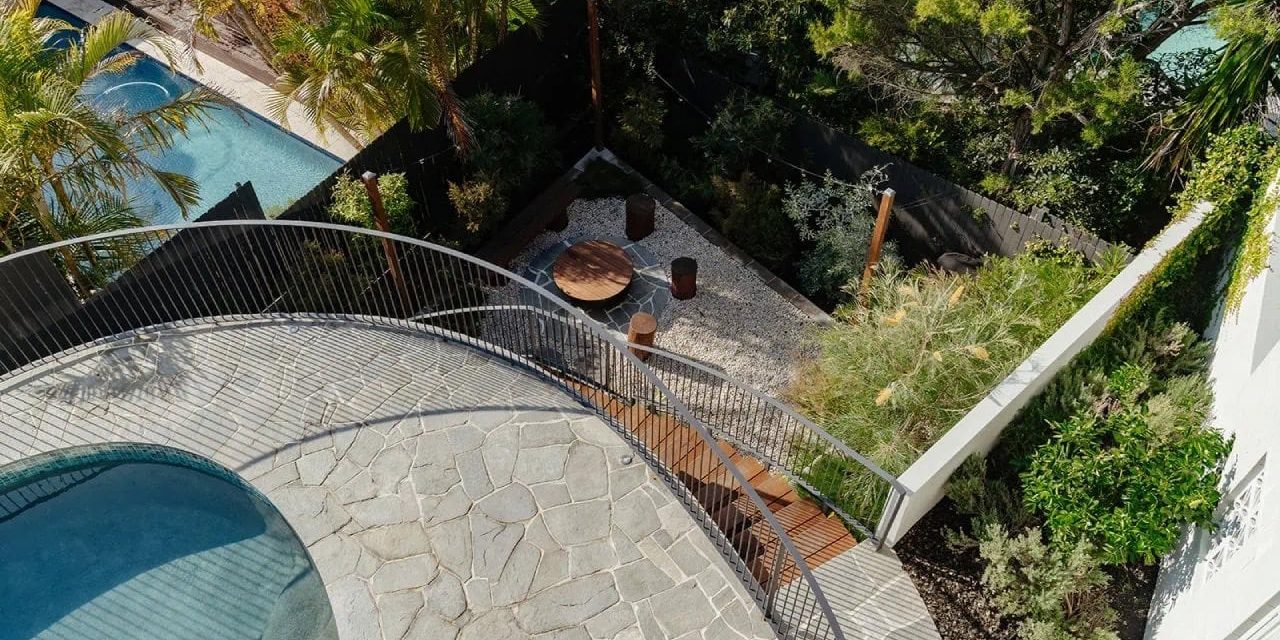
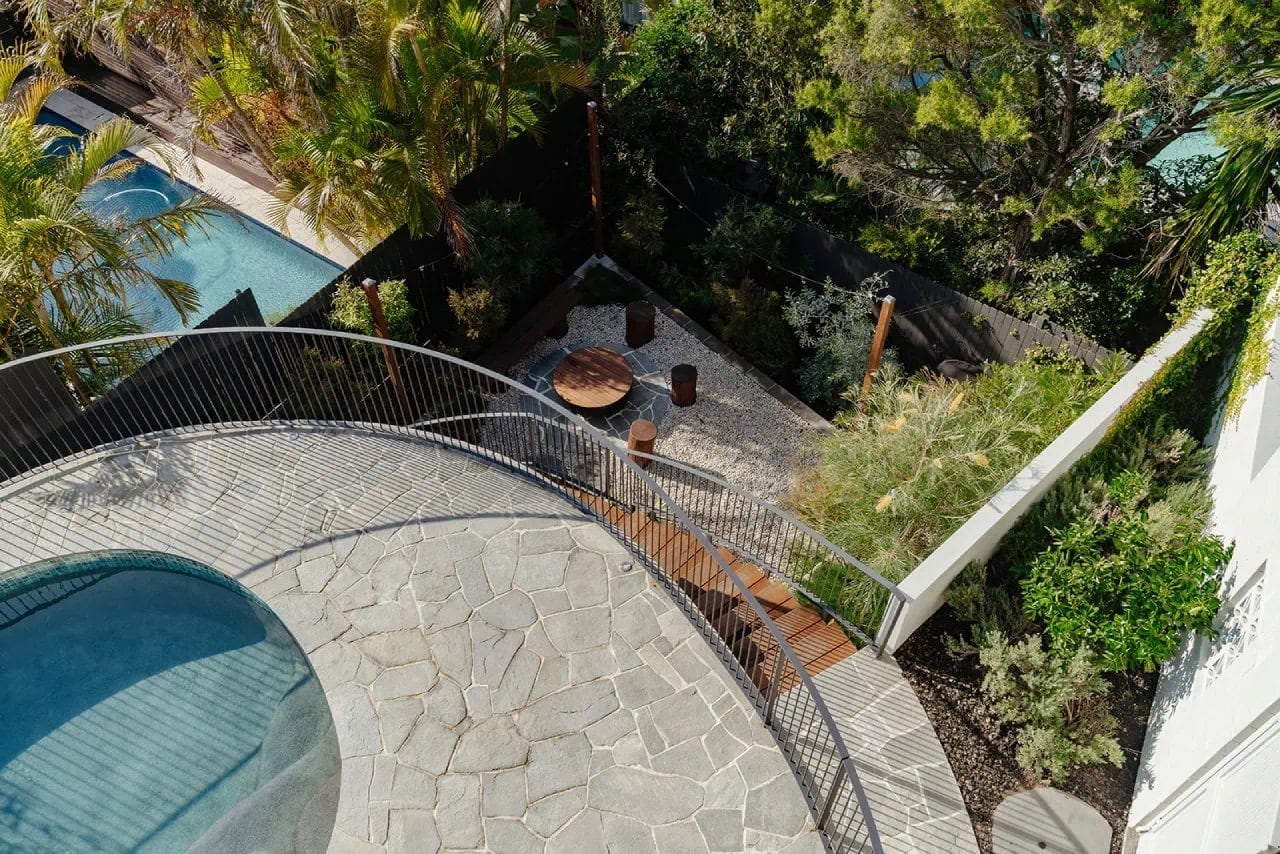
At our Castlecrag project, an existing curved sandstone wall became the inspiration for the shape of the pool. The curves were continued through the pool edge, coping, sandstone walls and timber decking, allowing the new work to feel connected to what was already there.
This type of response usually produces a more individual result than starting with a standard pool shape and trying to force it into the property.
Trends will come and go, but a design that fits the house and site is less likely to go out of style.
 Consider Renovating Instead of Rebuilding
 Consider Renovating Instead of Rebuilding
Even if the swimming pool looks dated and the landscaping looks dated, the pool itself may still be structurally sound.
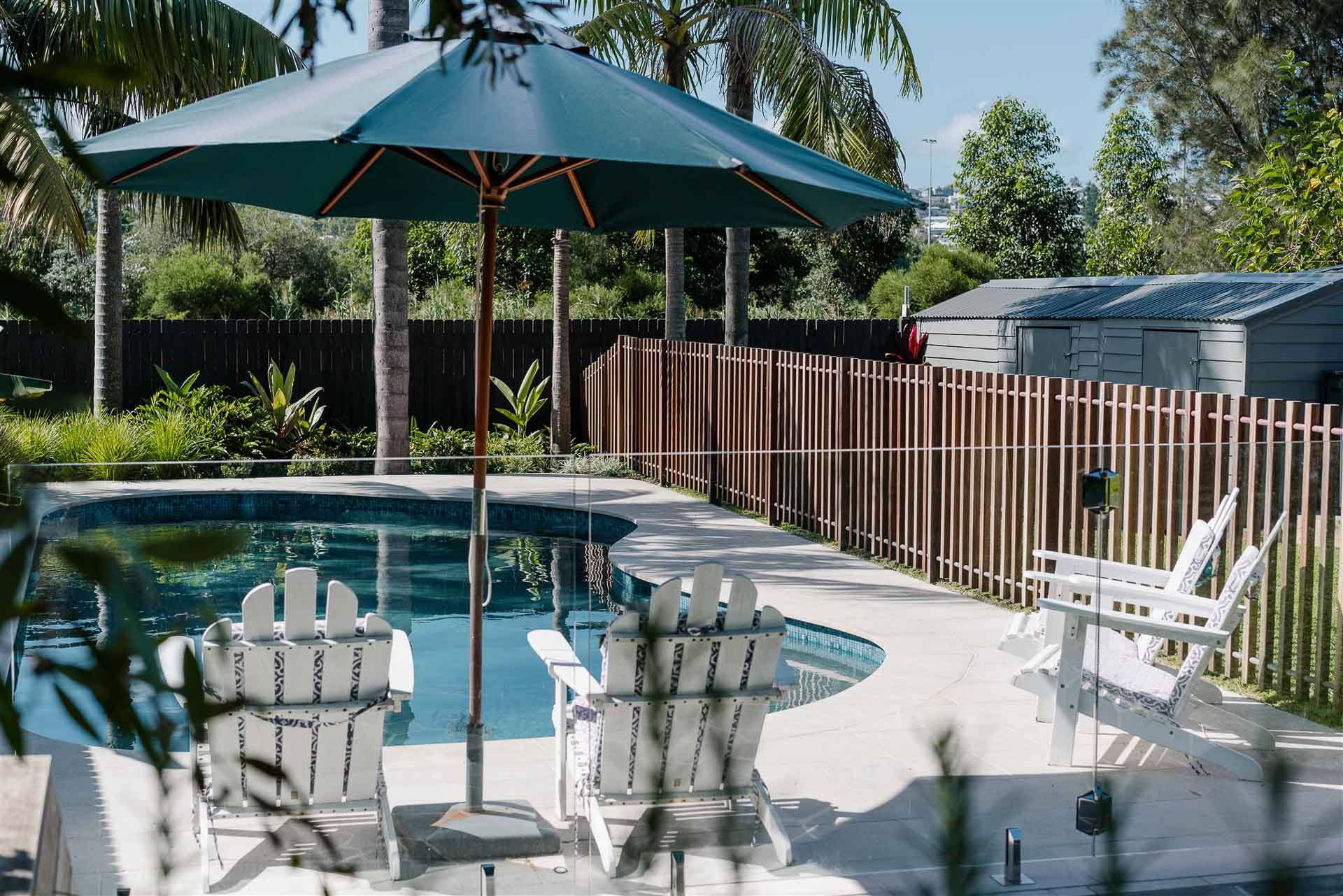
New waterline tiles, coping, paving, planting and fencing can make a big difference without changing the pool shell.
In other instances, the shape or size of the pool may have to be rethought. If the pool is too large, it may be possible to reduce the size to make more space for entertaining, lawn or planting.
At a Mosman property, we designed a new contemporary pool within the footprint of the existing pool shell. The new pool was a more controlled rectangular shape with curved edges, a circular spa, new seating and frameless glass fencing. This enabled the use of the existing site and the reconfiguration of the pool/garden relationship.
A pool renovation should not be limited to just changing out old finishes for new ones.
It is an opportunity to reconsider how the entire area functions. This might include changing access, adding steps or seating, improving privacy, updating the fence or introducing a more suitable planting design.
If you are considering removing an existing pool, have it inspected and evaluated for its condition and potential. There may be more options available than you initially expect.
The following are some of the most common pool landscaping mistakes to avoid.
The majority of pool landscaping issues start before the construction process.
Some of the most frequent errors are:
- Designing the pool before planning the rest of the backyard
- Exceeding the pool size for the space available
- Avoiding the creation of narrow, unusable areas around the water
- Not knowing where to place people for shade or seating
- Selecting plants that produce continuous litter and upkeep
- Too many unrelated materials used
- Not considering the pool fence as a first priority
- Not considering the interior view of the pool from the house
- Not planning for changes in level
- Attempting to address privacy issues once the pool has been constructed.
These problems can be addressed in the landscape and pool design before construction begins. It also provides builders with more accurate information and minimizes the need to make critical design decisions on site.
Choosing the Right Swimming Pool Landscaping Ideas
The concepts that will work for your backyard will vary based on the property and how you plan to use it.
Begin by posing some practical questions:
- Who will be the primary users of the pool?
- Is it primarily for children, exercise, entertaining or relaxation?
- How much garden or lawn do you want to retain?
- Where will people sit when they are not swimming?
- What areas of the backyard are neglected?
- What time of day does the area get sun and shade?
- How will people move between the house and pool?
- How much garden work are you willing to do?
- Could an existing pool be renovated?
- Will there be any retaining walls, major excavation or approval needed?
These questions are not as exciting as selecting pool tiles, but they have a much greater effect on whether the finished backyard works.
A Pool Should Feel Like Part of the Backyard
Our role is not simply to draw a swimming pool.
We consider how the pool will be integrated into the home, where people will be spending time, how the garden will provide privacy and what materials will tie the whole design together.
That broader approach is something clients regularly mention in their feedback. Space Landscape Designs has an average Houzz rating of 4.9 from 37 reviews, with clients frequently referring to the team’s creativity, communication, practical problem-solving and management of complex projects. View the reviews on Houzz.
‘Jason’s creativity and attention to detail has helped to create a transformation of what was an unusable area into an exciting new entertainment space.’
Client review on Houzz
This is the ultimate goal of good pool landscaping. It should make the backyard look thought-out, functional and appropriate for your lifestyle.
Space Landscape Designs offers swimming pool design, pool landscaping, pool renovation planning, 3D modelling, approval documentation and project management.
Talk to our team about designing a pool and landscape that is right for your home.
Pool landscaping FAQs
Is large-format paving or crazy paving better around a pool?
It comes down to the pool's shape and the house behind it, not a fixed rule. Large-format paving, in porcelain or sawn sandstone, suits contemporary rectangular pools and reads clean and minimal. Crazy paving, made from irregular natural stone, suits free-form or curved pools and brings in texture. Whichever you choose, it needs a slip-resistant, sealed finish — that's not negotiable around a pool.
How much does pool landscaping cost in a Sydney backyard?
Budget roughly $15,000-$60,000+ on top of the pool shell for the surrounds: paving, retaining walls, planting, fencing and shade structures. A small courtyard-style upgrade sits at the low end; a full build with a cabana, feature walls and layered planting pushes it well past that. Site access and slope move the number too, and a steep block adds cost before you've chosen a single plant.
Is it faster to renovate existing pool landscaping or start again?
Renovating is almost always faster, since the pool shell, plumbing and structure stay put and the work is just paving, planting and fencing. That can often be done in a matter of weeks. A full rebuild, involving excavation and a new pool shell, typically runs several months from design through construction. If the shell's sound, there's rarely a reason to start from scratch.
What plants are best to grow around a swimming pool in Sydney?
Lomandra, Dianella, clipped Westringia and agapanthus are my usual go-tos, hardy, low-litter species that shrug off chlorine splash, reflected heat and salt-laden air. Skip deciduous trees near the water; nobody wants to net leaves out every morning. Layered planting along the pool edge also softens the hard lines of paving and fencing, and keeps maintenance manageable through Sydney's humid summers.
How do you get privacy around a pool without making the backyard feel closed in?
Layer varied-height planting and semi-transparent screens rather than building one continuous high fence, which tends to box a yard in. Staggering hedging, feature trees and slatted timber battens at different heights blocks sightlines from neighbouring homes while still letting light and air through. It's a common approach on the tighter blocks we see across the Northern Beaches and North Shore.
Do I need a pool fence around my backyard pool in Sydney?
Yes. Every backyard pool in NSW needs a compliant child-resistant barrier under the Swimming Pools Act 1992 and Australian Standard AS1926.1, with self-closing, self-latching gates. Frameless glass fencing is popular for good reason: it satisfies those requirements without cutting off the view to the pool and garden, which matters more on smaller blocks.
Is it worth hiring a landscape designer for pool surrounds rather than just a pool builder?
A designer treats the pool as part of one connected outdoor space rather than an isolated structure, coordinating paving, planting, shade and levels with the house from the start. That's particularly useful on sloping blocks such as Mosman, Castlecrag and Northbridge, where retaining walls and level changes need careful planning around the pool. Worth the conversation before you lock in a builder.