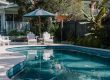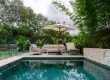
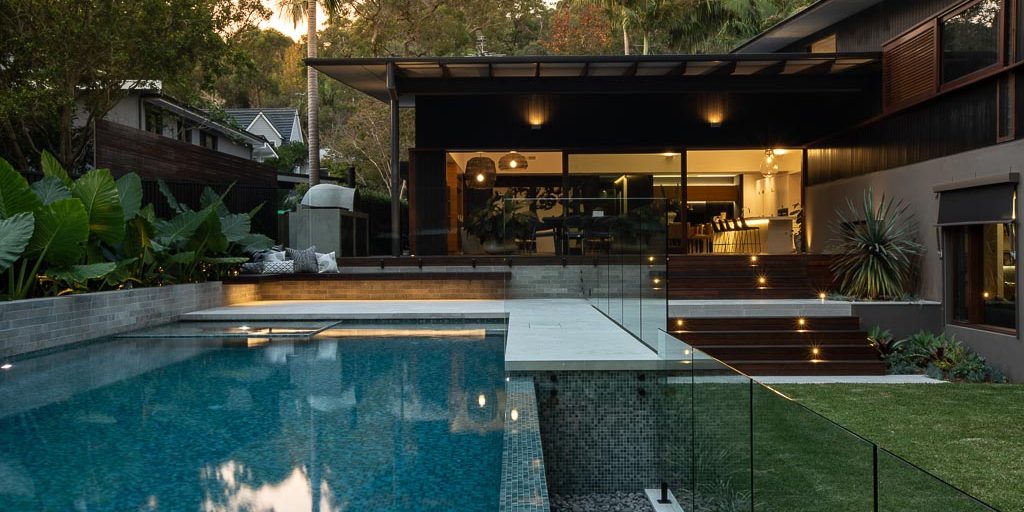
A pool without landscaping is just a pool. It’s not magic. It’s not gracious. It’s not particularly nice looking. It’s just a big outdoor tub of water that you use to swim and to cool off on hot days. That’s all well and good if that’s all you’re after. However, a truly attractive and sophisticated swimming pool absolutely has got to be part of a good landscape design. Landscaping, including elements like flowers, trees, shrubbery, patio tiles and pavement, is needed to structure your pool, soften its appearance and connect it to your home, both visually and practically.
Connect the Pool To Your Home
Your pool is part of your home, as your whole yard is, in a sense. It’s the outdoor part of your living area. When you move from the house to the pool area, what will the experience be like? When you share your pool with guests, how will swimming and sunbathing fit in with other activities like cooking, eating, drinking and talking? Hard landscaping like pavement or patio tiles can define paths that connect your pool to the house and to the other areas of the yard. Well-selected plants can help to define spaces, providing separation and privacy both from adjacent properties and between areas of your yard.
Make the Pool Part of Your Garden
Landscaping can ease the transition between the swimming pool and the garden. It can draw part of the pool into the softscape, or it can create an intermediate area that’s a little more disciplined through the use of potted plants and well delineated garden beds. Landscaping can be used to shade the pool area, make it more private and improve the appearance of the pool fence. Plants and trees can even cool the air in your yard and around your pool.
Embrace Beauty; Avoid Ugliness
The fact is, the landscaping around a pool (or lack thereof) can make the difference between a harsh, ugly and utilitarian space, an elegant and disciplined space, and a gorgeous, natural-looking pool straight out of a flowery summertime fantasy. Most people prefer a pool that doesn’t flaunt its structure and its artificial nature. They like to see a softer, more natural look, and that can only be achieved with landscaping. As five, ten or twenty years pass, will your pool gain charm or lose charm? Chances are good that if it’s well landscaped, it will become more beautiful as the plants around it mature. If it’s left as a plain, harsh shell then it will simply look less perfect as it ages.
Pool Landscaping FAQs
What plants work best around a pool in Sydney?
Salt- and chlorine-tolerant, low-litter species work best around a pool — Lomandra, Dianella, Frangipani, Agave and clumping bamboo are all common choices on the Northern Beaches, picked specifically to keep leaf drop out of the water. Beyond plant performance, the right planting also buys you privacy from next door and softens the hard edges of paving and pool fencing.
How does landscaping actually improve a pool area beyond looks?
Good pool landscaping connects the pool visually back to the house, adds shade and privacy, and improves the look of the required safety fencing by folding it into the planting instead of leaving it as a stand-alone barrier. Trees and shrubs positioned well also cool the air around the pool on hot days, which makes the space genuinely more comfortable to use, not just nicer to look at.
Do I still need a compliant pool fence if I landscape around the pool?
Yes — no amount of planting replaces the legal requirement for a compliant child-resistant barrier under the NSW Swimming Pools Act 1992 and AS 1926.1. Good design integrates the required fencing into the planting and hardscape so it reads as intentional rather than bolted on afterwards, but the barrier itself still has to meet council inspection standards regardless of how well it's disguised.
What's the difference between hard landscaping and soft landscaping around a pool?
Hard landscaping means the non-living elements, like paving, patio tiles and pavement, that create paths and usable surfaces around the pool. Soft landscaping means the plants: flowers, trees and shrubbery, which provide privacy, shade and separation from next door. A well-designed pool area needs both working together; lean too far into one and the space stops functioning properly.
How much does landscaping around a pool cost in Sydney?
Paving is usually the biggest cost in a pool surround, and the area of it matters more than which material you pick. After that come level changes and retaining, then fencing, then planting — typically the smallest share despite being the most visible. The part people miss is access: if materials can't be machine-delivered onto a tight site, labour climbs on an otherwise straightforward job.
How long does it take to landscape a pool area after the pool is built?
Once the pool shell and paving are done, surrounding softscape planting and any extra hardscaping typically take a few weeks to install, though larger gardens with retaining walls, screening trees or extensive paving take longer. Planning the landscaping alongside the pool design from the start, rather than fitting it in afterwards, generally gives a better result and avoids reworking finished paving later.
Should I hire a landscape designer before or after choosing my pool builder?
Ideally before. Bringing a designer in at the concept stage means the pool position, fencing and surrounding garden get planned as one cohesive design, rather than the landscaping being squeezed in around a pool shape that's already fixed. This matters most on Northern Beaches blocks with slope, existing trees or privacy considerations, where the pool and garden really do need to be worked out together.
Next: Contact or Landscape Architects
What are the best strategies for landscaping around pools? That’s for a future post! However, if you get in touch with Space Landscape Designs, one of our landscape designers or landscape architects will be happy to discuss the specifics with you right away.
Also feel free to browse our showcase for landscaping ideas.