Above ground plunge pools can make a lot of sense in Sydney, particularly on sloping blocks or sites where excavation is difficult. But I wouldn’t raise a pool simply because it can be easier to build.
As with any pool, the position, levels and relationship to the house need to make sense first.
In many cases, the best result isn’t a pool sitting completely above the ground. It might be partially raised, built into a slope or set at the same level as an entertaining area while the garden falls away below it.
What is an above-ground plunge pool?
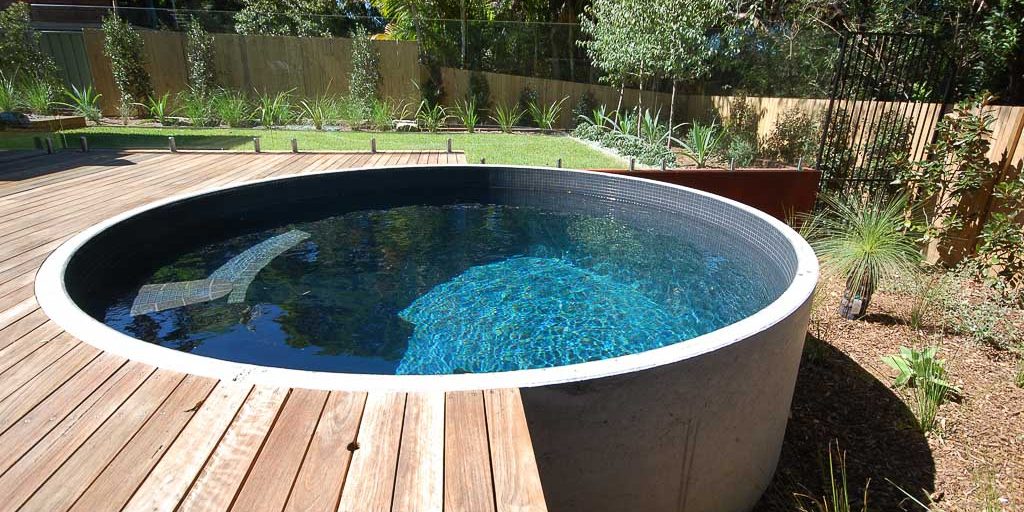
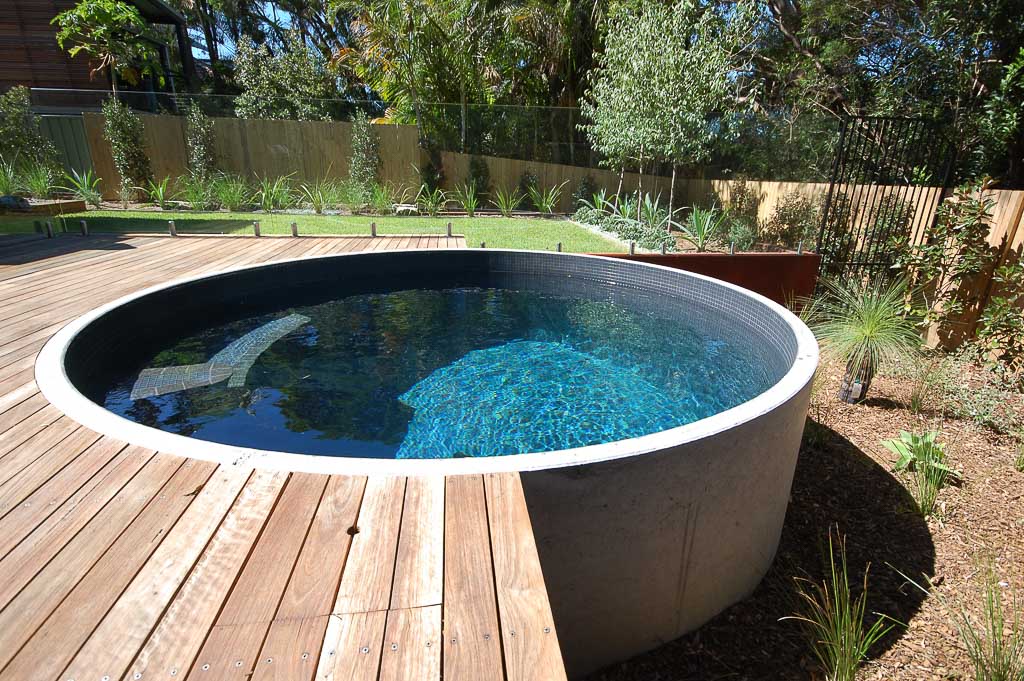
An above-ground plunge pool is a small pool where some or all of the structure sits above the surrounding ground level.
That could mean a fully raised pool, a semi-inground pool or a pool retained into a sloping site with one side exposed.
From a design point of view, I’m less interested in the label and more interested in why we are raising it.
 Why build a plunge pool above ground?
 Why build a plunge pool above ground?
The most obvious reason is a sloping block.
Sydney has plenty of sites where the house sits well above or below the rear garden. Rather than flattening the whole backyard, a raised pool can become part of the transition between levels.
It can also help where excavation is difficult because of sandstone, restricted access, neighbouring buildings or existing retaining walls.
Another reason is the relationship between the pool and the house. If the main living area sits above the garden, sinking a plunge pool too far into the ground can mean you barely see it from inside. Raising the water level can create a stronger connection between the house, entertaining area and pool.
The advantages
A well-designed above-ground plunge pool can solve several problems at once.
Less excavation may be required, particularly on sloping sites. The pool can also become part of the level change instead of treating the pool, retaining walls and landscape as separate elements.
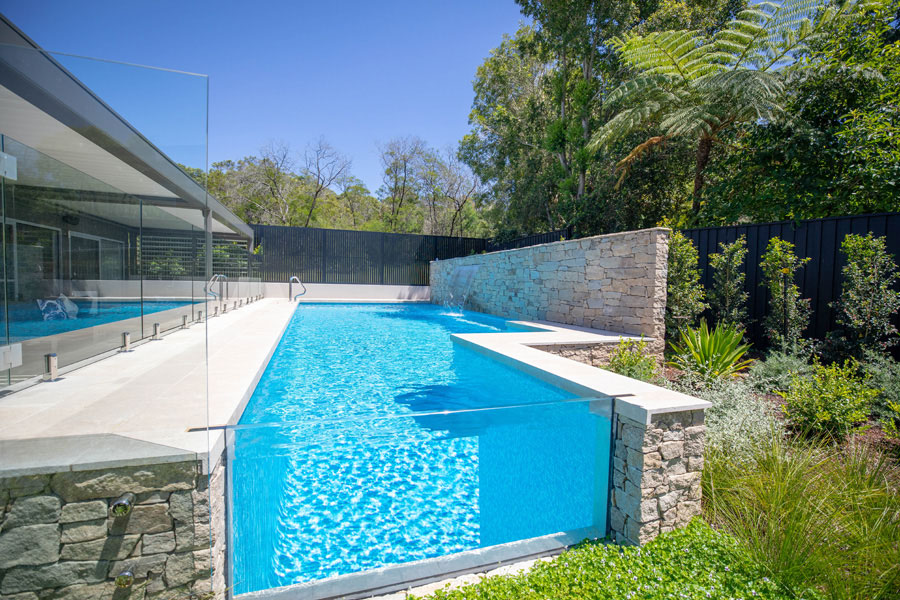
The exposed pool wall can become a feature. Natural stone, concrete, tiles, planting or even a pool window can turn a structural wall into part of the landscape.
We used this approach on our Modern Glass Window Pool in Bondi. The pool was raised to work with the site levels and views from the house, while the exposed side created the opportunity for a glass window.
Our Glass Window Lap Pool in Narrabeen takes a similar approach. The elevated pool structure is clad in natural sandstone, helping it sit more naturally within the landscape.
The disadvantages
The biggest thing to understand is that an above-ground plunge pool isn’t automatically cheaper.
You may reduce excavation, but there can be additional costs in structural engineering, concrete work, exposed finishes, stairs, decking, fencing and retaining.
You also have to think carefully about what the exposed side of the pool looks like. On a small site, a large blank concrete wall can dominate the backyard quickly.
This is why I wouldn’t choose an above-ground pool purely to save money. There needs to be a design reason for doing it.
Above-ground or semi-inground?
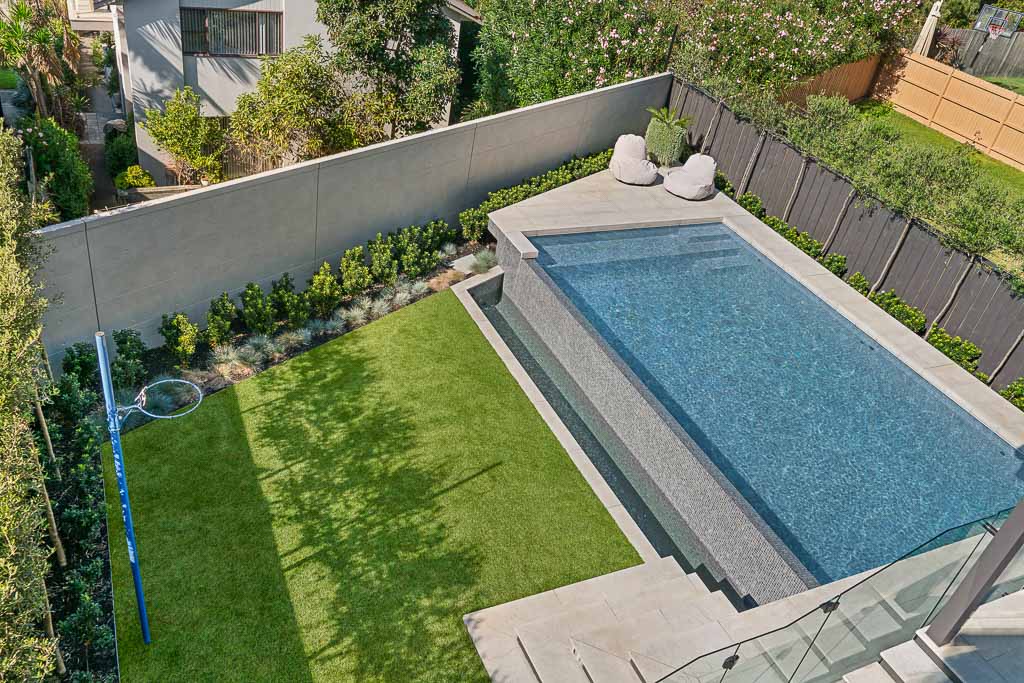
On many Sydney sites, I think the semi-inground approach is the more interesting option.
Part of the pool can be retained into the higher side of the block while another edge remains exposed. The deck might meet the pool at one level, while the garden continues below.
It tends to feel more integrated because you’re working with the existing site rather than placing a pool on top of it.
What should you expect?
Before deciding whether an above-ground plunge pool is right for your backyard, we look at site levels, access, soil and rock conditions, drainage, engineering, pool fencing, privacy and how the pool will be viewed from the house.
Approvals also need to be considered early. Being above ground doesn’t remove the normal requirements around pool barriers, structural certification or the appropriate council or CDC approval pathway.
Early planning checks for an above-ground plunge pool in Sydney
| Planning consideration | What to check | Design implication |
|---|---|---|
| Siting | For complying development in NSW, the pool must be for private use, associated with a dwelling house and positioned behind the building line. | Confirm the pool location early so it works with the home, outdoor layout and applicable planning pathway. |
| Boundary setbacks | The waterline generally requires at least a one-metre setback from side and rear boundaries. | Allow for setback space when planning the pool footprint, paving, planting and access around the pool. |
| Structural requirements | Check structural adequacy from the outset. | Ensure the elevated pool and its supporting structure are appropriate for the proposed site. |
| Installation requirements | Follow manufacturer installation requirements. | Coordinate the selected pool system with site access, construction details and surrounding landscape works. |
| Building compliance | Confirm Building Code compliance. | Incorporate compliance requirements into the project before finalising the outdoor design. |
| Barrier safety | Owners must maintain a child-resistant barrier; City of Sydney properties are subject to a mandatory barrier inspection program. | Integrate the enclosure and gate access into the wider outdoor setting. Verify requirements against current NSW and local council guidance. |
So, are above-ground plunge pools a good idea?
Yes, when the site gives us a reason to raise the pool.
On sloping blocks, difficult sites and homes where the living areas sit above the garden, they can be a very good solution. They can reduce excavation, make better use of changing levels and turn the pool into a stronger part of the overall landscape.
But on a flat backyard with no reason to raise the pool, I wouldn’t force it.
The best pool design should always come from the site.
 Above-ground plunge pool FAQs
 Above-ground plunge pool FAQs
Can a plunge pool be installed above ground?
Yes. Plunge pools can be fully above ground, partially raised or semi-inground. The right approach depends on the levels, access, structure and overall design of the backyard.
Are above-ground plunge pools cheaper than inground pools?
Not necessarily. You may save on excavation, but raised pools can require additional engineering, structural work, cladding, decking, stairs or retaining walls.
Are above-ground plunge pools good for sloping blocks?
They can be particularly well suited to sloping blocks because the pool can work with the change in levels rather than requiring the entire backyard to be flattened.
Can you build a concrete plunge pool above ground?
Yes. Concrete gives you considerable flexibility over the shape, dimensions, finishes and how the exposed sides of the pool are treated.
Do above-ground plunge pools need approval in Sydney?
Building above ground doesn’t remove the normal planning, structural and pool safety requirements. The appropriate approval pathway depends on the property and proposed pool.
What is a semi-inground plunge pool?
A semi-inground pool is partly below ground and partly exposed. This can work particularly well where a backyard slopes or has different levels.