Garden steps are not confined to a utility function of providing a means to cover the differences in level in garden; they are a vital component of the garden’s form. Garden steps are the architectural feature that defines the changes of level and can become the accent of landscape design if they are thought through to the smallest detail. In this article I will look at some of the concepts and suggestions on proper use of garden steps in the garden design process.
Learning the Significance of Garden Steps
Before diving into design ideas, it’s essential to understand the role garden steps play in your outdoor space:
- Accessibility: Garden steps make for an easy transition between different levels of garden especially were the ground slopes or is inclined.
- Safety: Well built steps minimize the probability of slippage or falling hence ensures a good path way is accomplished.
- Aesthetic Appeal: Garden steps may be used to provide that much needed framework, percussive element, and depth in any landscape design.
- Functionality: Garden paths or steps can define separate areas within the garden, thus, bringing the clear logic of organization to the outdoor territory alongside with the improved functionality of the space.
-

- Grand entrance for garden landscape ideas
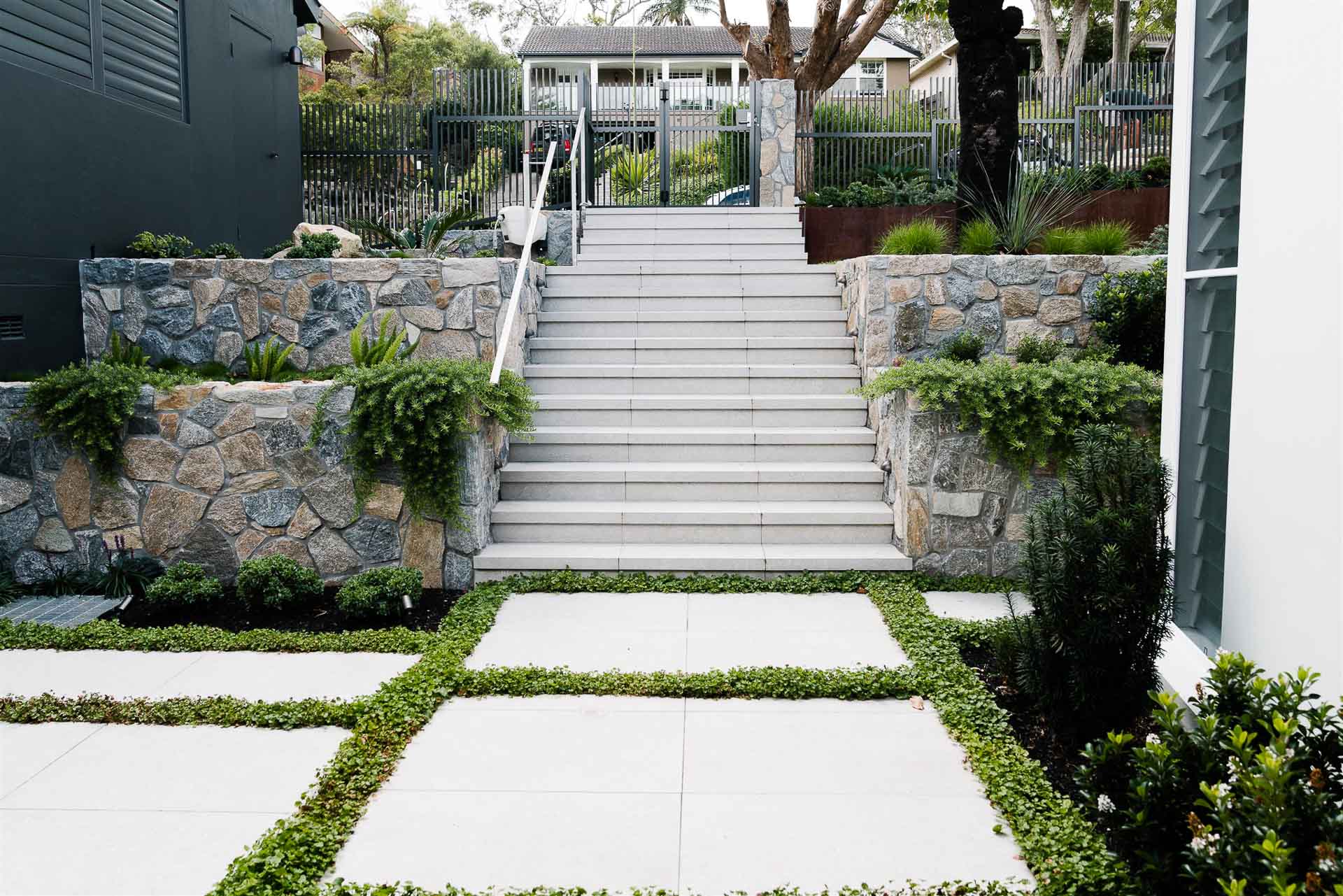
Ideas for Garden Steps for the Innovative Home
Here are some creative and practical ideas to help you design and enjoy your garden steps:
Use Natural Stone
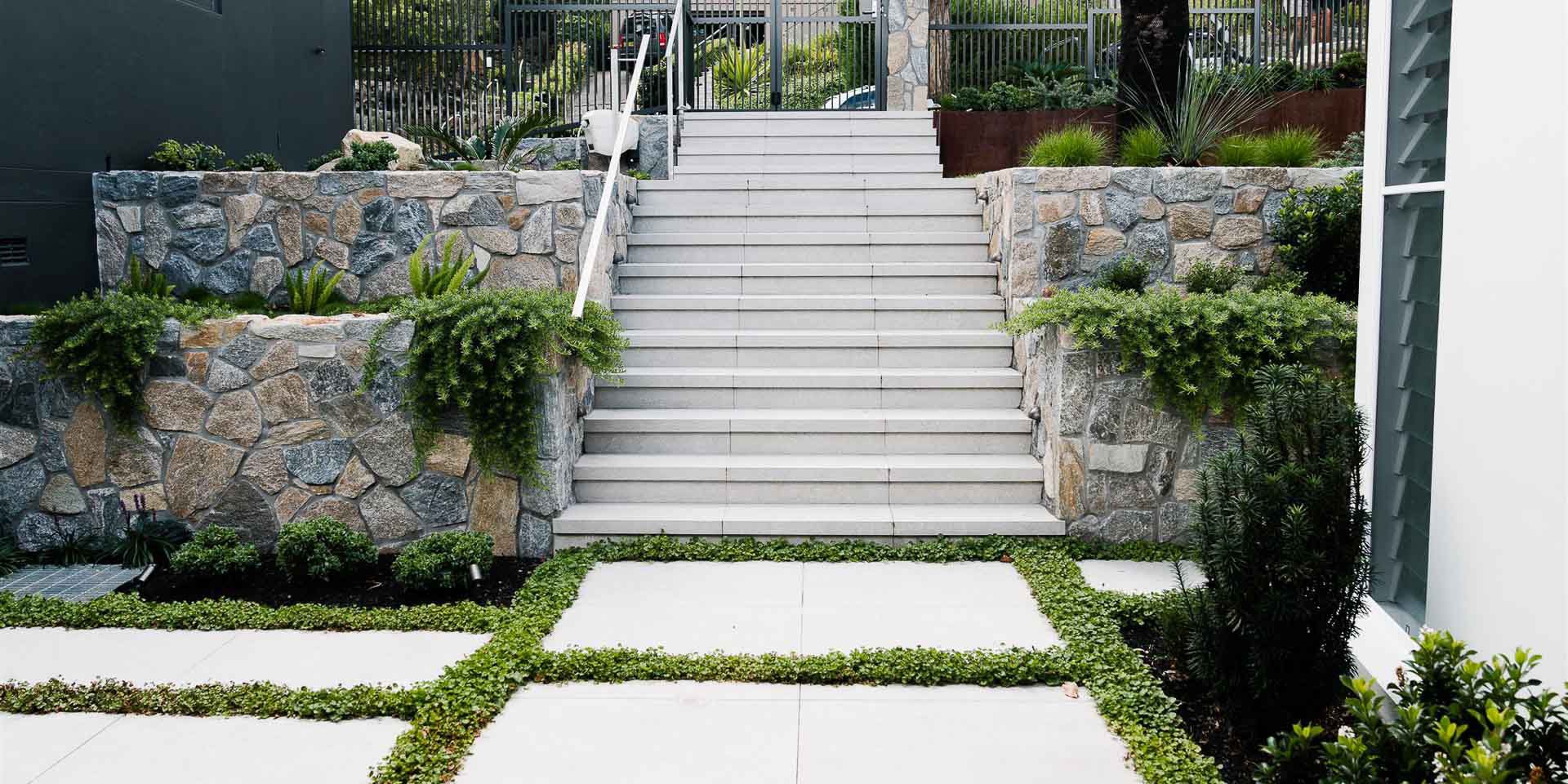
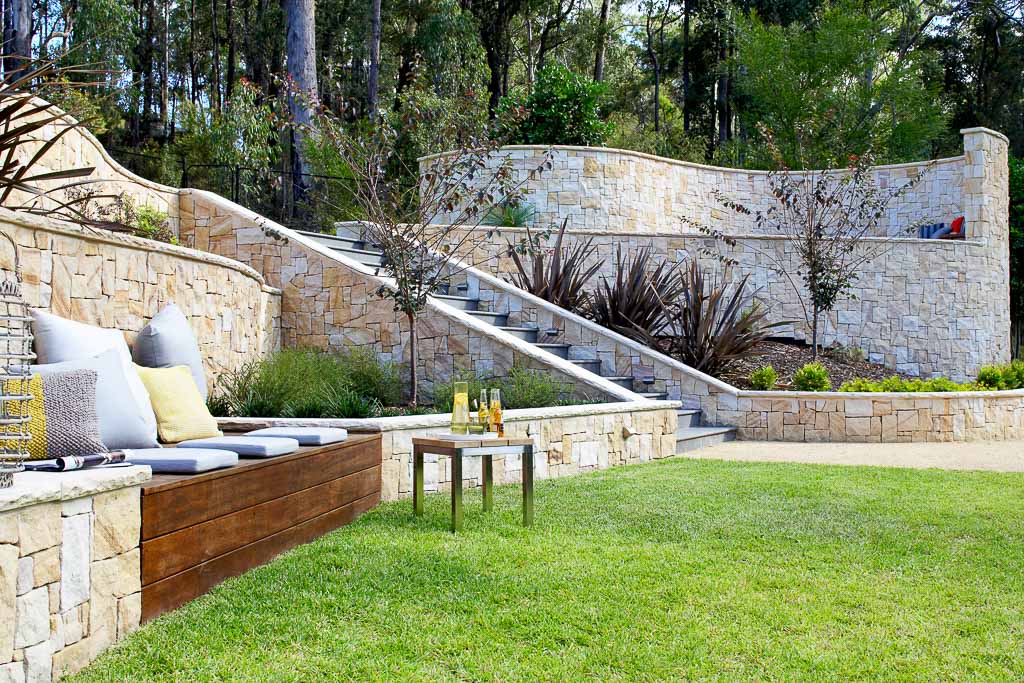
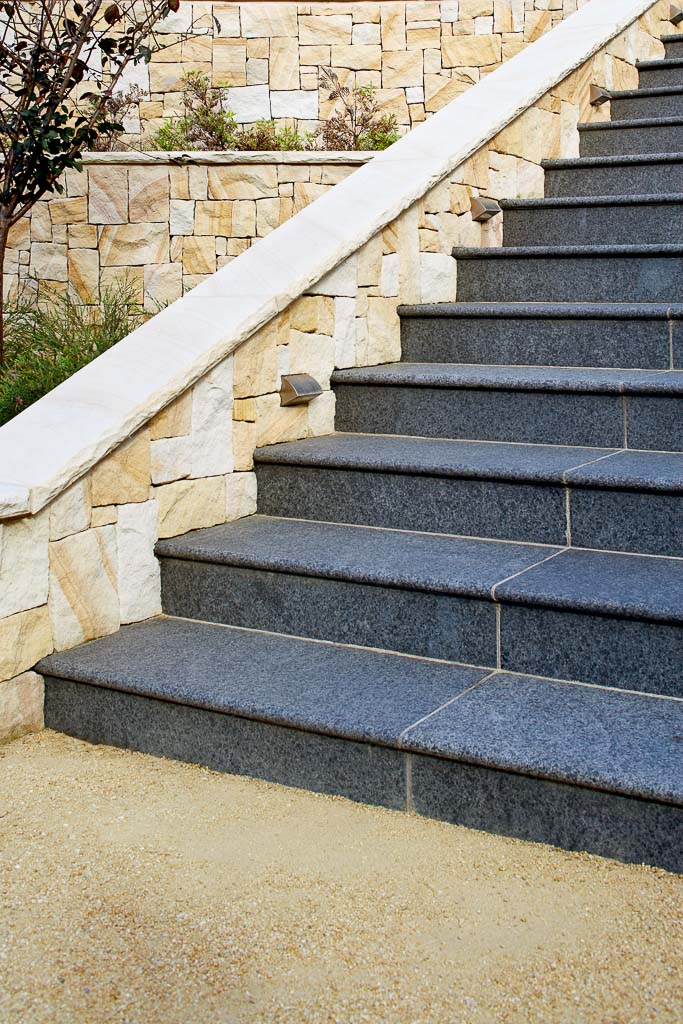
Granite used in steps of gardens is so common since it is strong and has an attractive look that can modernize any home. Slate rocks, granite rocks, and limestone join with the natural setting. They bring out a beautiful old world appearance and adds beauty to the garden regardless of the style that is being implemented. For a more natural appearance choose stones with unconventional shapes or on the other hand on a more smooth and sleek appearance choose stones that are cut neatly.
Incorporate Timber Steps
These timber steps are colourful and add warmth to how it looks which is suitable for use in modern and novel gardens. Hard wood types such as oak or teak should be used for the furniture which will reduce the bench to adverse conditions and the furniture should be treated timber. Outdoor timber steps can be built right into your deck, patio, or sloping garden to create the seamless transition between different garden spaces.
Add in Lighting
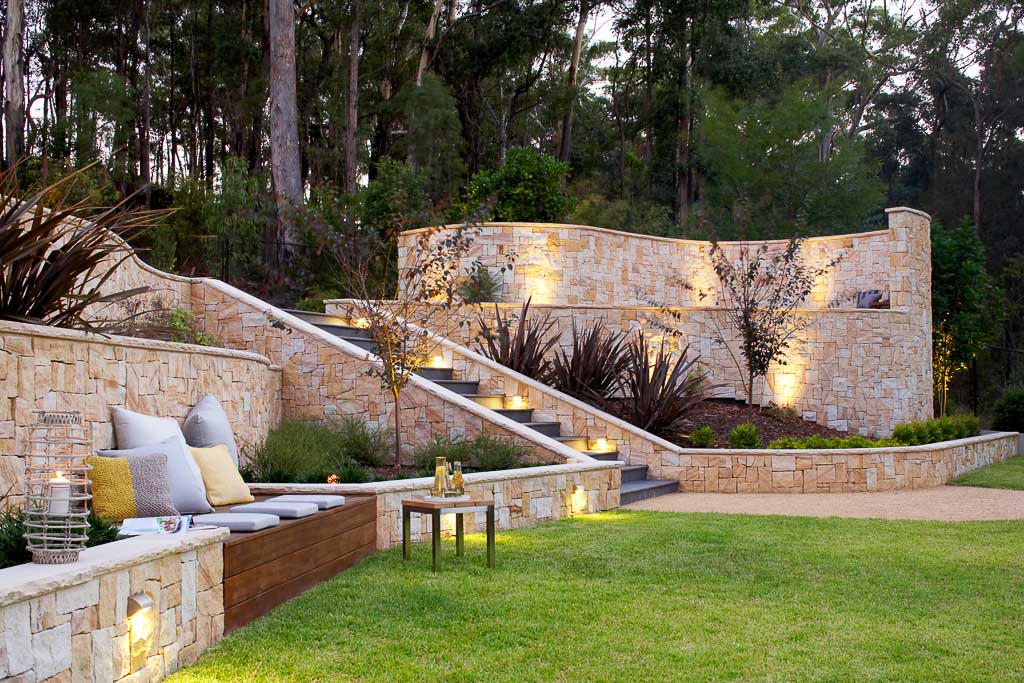
By incorporating lighting into your garden steps you create safety and ambiance. Consider using LED strip lights on edge to steps or having recessed lights in the risers. Another relatively eco friendly option is stake lights that use solar power and don’t need much in the way of maintenance. Correct lighting can make your garden steps safer to traverse at night and flesh out their design.
Create Floating Steps
Floating steps are a modern and façon minimalistic design feature that recreates the illusion of steps hanging in space. On slopes, or over water features, the appearance of this design is particularly nice. The steps should made of concrete, stone or metal and be securely bolted down. Floating steps jazz up a garden with a very contemporary look.
Integrate Plants
Plants added to your garden steps design will soften the hardscape and add a graceful touch. Fill in between the steps with low growing ground cover like thyme or creeping jenny, or even sedum. You can also plant greenery alongside the sides of the step, either with standing planters or built in planters.
Design Wide Steps
Grand wide garden steps also make a grand statement and offer comfortable and spacious pathway. It’s perfect design for places where you might want openness and elegance. Wide slabs of stone or concrete can be used, as well as handrails or balustrades would also be aiding the safety and style. But wide steps also provide extra places to sit when you are having a gathering.
Incorporate Water Features
Garden steps when combined with water garden features provide you with a tranquil and very beautiful spot. Imagine going even further with a stream or waterfall, and designing steps that cascade, or even installing a small pond at the bottom of your steps. With this kind of flowing water sound added, it soothes your garden, and at the same time gives it a good look with reflective surface.
Use Brick or Pavers
With a classic and charming look, brick and pavers can be used to make garden steps. There are all the ways to come up with a composition for it that you want: colours, shapes, and sizes. Brick steps are good in cottage gardens and sleek pavers for a modern landscape.
Add Handrails for Safety
Especially for garden steps on steep slopes or those used frequently handrails are an important safety feature. Pick materials that will complement your steps and overall garden design—maybe wrought iron, wood or stainless steel. Handrails not only help in support but they also give an architectural feel to your garden steps.
Incorporate Artistic Elements
Features in your garden steps make it unique. Try mosaic tiles, engraved stones or you can choose custom designed risers with intricate patterns. These artistic touches are just another way for you to use your own personal style and garden steps that will really stand out in your landscape.
-

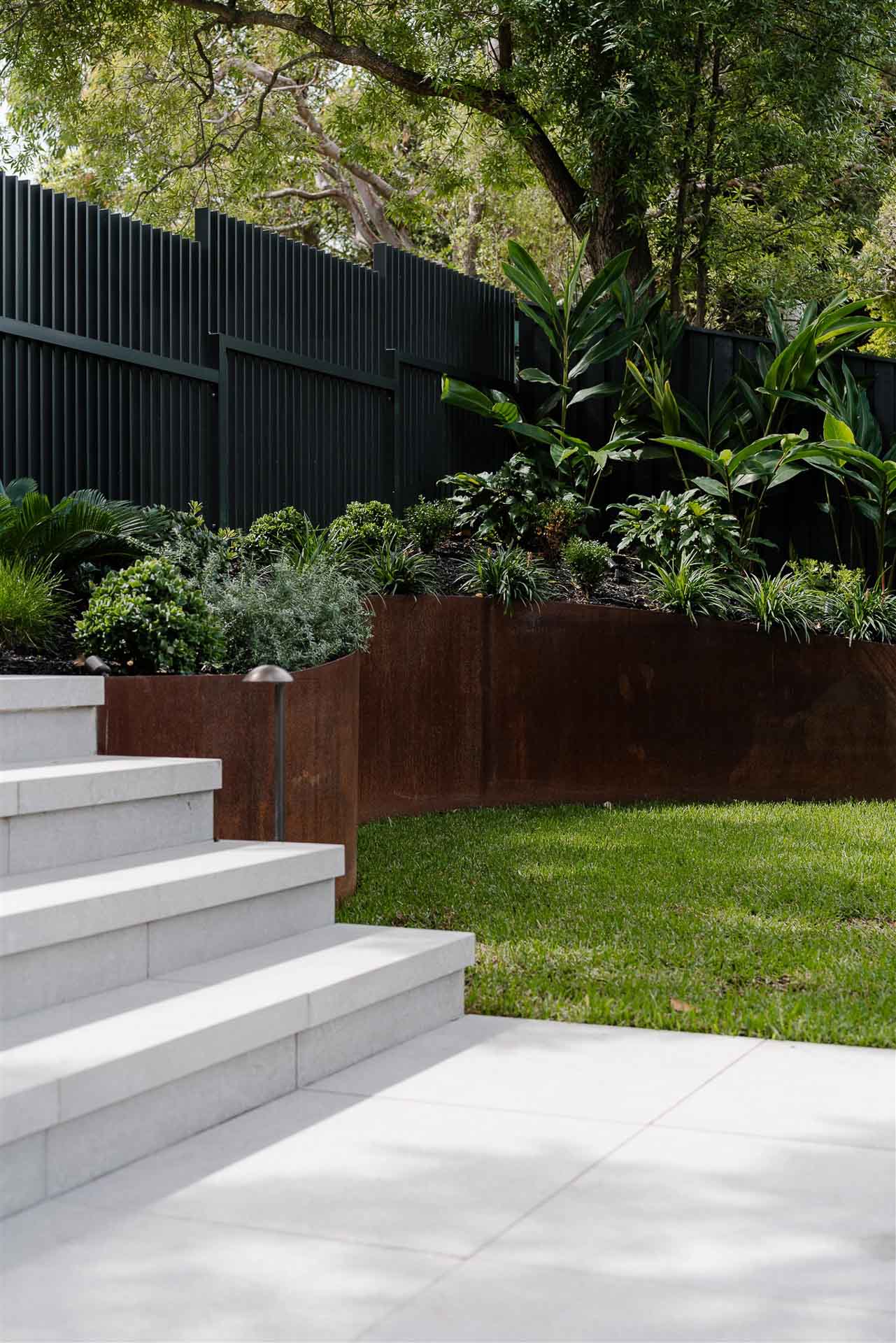
- Corten steel retaining wall for garden design consultation
-
services-sydney/” title=”Landscape Design Services”>landscape design services” data-dt-img-description=”” data-large_image_width=”1281″ data-large_image_height=”1920″ href=”https://www.spacedesigns.com.au/wp-content/uploads/2018/02/front-entrance-2.jpg”>
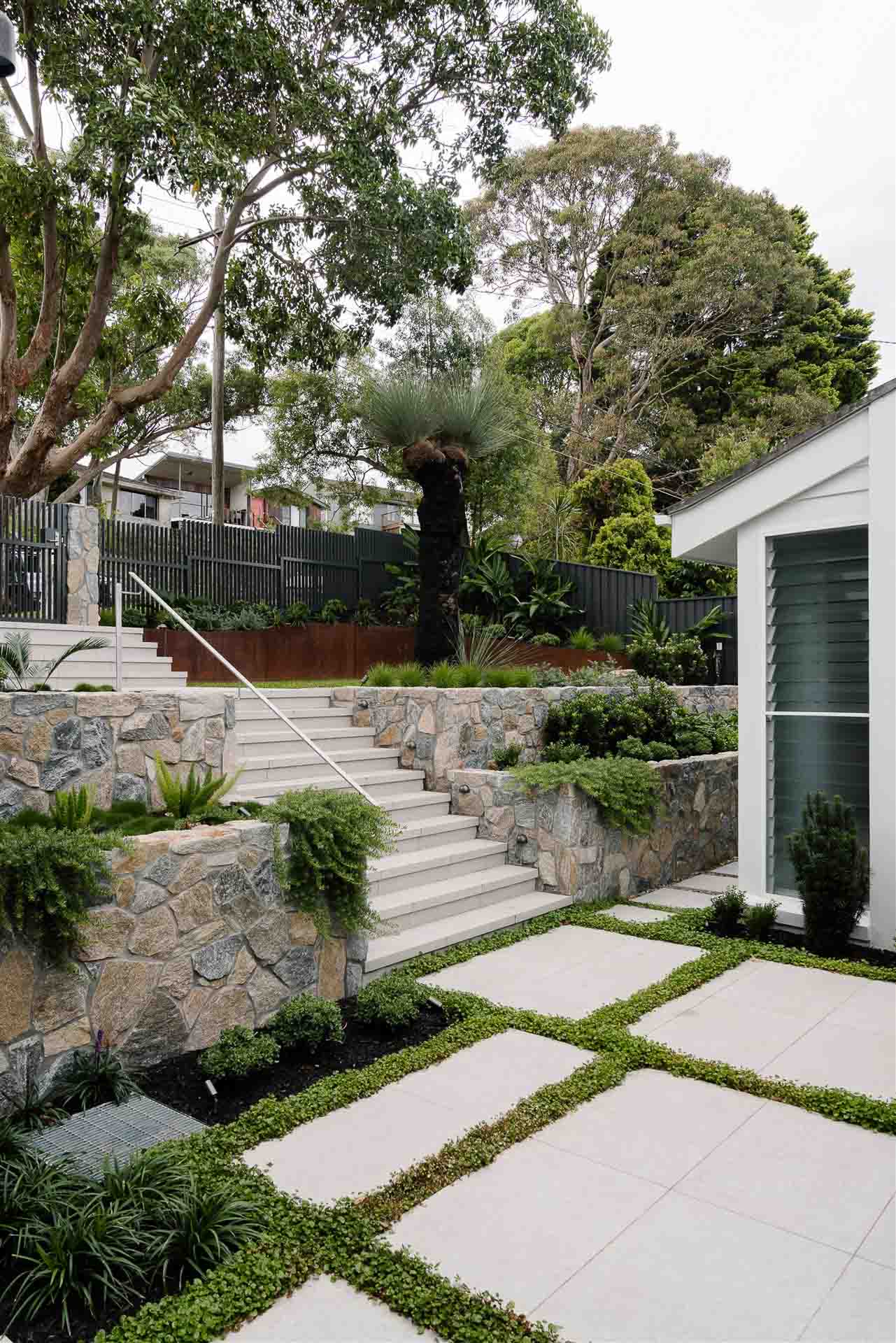
- Front entrance for landscape design services
Here are some tips to help keep your garden steps in good condition:
For steps to be safe and aesthetically attractive, they need to be well maintained to do this, the following procedures are followed. Here are some tips for keeping your steps in top condition:
- Regular Cleaning: Clear leaves dirt and debris off your steps so that you will not slip and also so that the steps will look good. If cleaning is needed a broom and pressure washer can be used for the same.
- Inspect for Damage: Check the surfaces regularly to see if they’re crack free and no stones are loose. Any part which is either broken or faulty has to be repaired or replaced as soon as possible because of the danger it poses.
- Check for Stability: It is also important to guarantee that all steps do not incline beyond the required degree and are strongly enough fixed. Make tight or compact to not move or sink.
- Maintain Lighting: First, clean and be sure that the step lighting is working properly. Also, make sure the bulbs are changed or wiring problems corrected so the area is well and safely illuminated.
- Treat and Seal: However, if it is timber steps, then a sealer or stain will need to be used to protect it from the consequences caused by instances of weathering. If your steps are made of stone or concrete you might want to seal them up to prevent water absorption and easy staining.
Garden steps FAQs
What's the best material for outdoor garden steps – stone, timber or concrete?
Natural stone, whether granite, slate or limestone, is the most durable option for Sydney's climate and shrugs off rain and foot traffic with barely any upkeep. Timber, usually oak or teak, gives a warmer look but needs regular sealing to stop it rotting. Concrete is the most budget-friendly and flexible choice, and can be finished with pavers, mosaic tiles or exposed aggregate if you want something less plain than a bare slab.
How much does it cost to build garden steps?
Material and site slope drive the cost far more than the number of steps does. A straight timber or poured concrete run on a gentle grade is the cheapest option, while natural stone with lighting, handrails or custom risers sits at the top. Steep sites, common through the Northern Beaches and North Shore, add excavation and often retaining work, which can end up costing more than the steps themselves.
What plants can I grow between or alongside garden steps?
Low, hardy groundcovers such as thyme, creeping jenny and sedum work well between and beside garden steps, softening the hard edges without turning into a trip hazard. They tolerate foot traffic, variable drainage and the part-shade conditions typical of stepped areas. Keep anything near the tread itself low, and save taller planting for the step edges or the garden beds alongside.
Do outdoor garden steps need a handrail?
Often, yes. Handrails are required on many outdoor stairs under the Building Code of Australia (BCA) and AS 1428 accessibility standards, once step height, total rise or step count pass set thresholds. Even when it's not legally mandated, I'd still recommend a handrail or balustrade for any run of more than a few risers, particularly on sloped or poorly lit garden paths.
How do I stop garden steps from becoming slippery?
Choose a textured or honed finish over polished stone, and add LED strip lights or solar stake lights so the steps are visible at night. Regular cleaning to clear moss, algae and leaf litter is the most effective ongoing measure, along with periodically resealing stone or concrete surfaces. Wide, evenly spaced treads with a consistent rise-and-going ratio also cut down slip and trip risk considerably.
Timber vs stone garden steps – which lasts longer?
Stone, generally, by a wide margin. It resists rot, insect damage and weathering far better over decades, whereas timber needs regular treatment and eventually needs replacing even when it's well looked after. Timber still has a place for its warmth and lower upfront cost, but in Sydney's humid, storm-prone climate, stone or concrete is the lower-maintenance option over the long run.
Should I hire a landscape designer to plan steps on a sloping backyard?
Yes, on a sloped site it's worth it. Getting the rise-and-going ratio wrong, or missing drainage, is how you end up with a hazard and an expensive rebuild rather than a fixable snag. We calculate the correct ratios, work out where retaining is actually needed, and choose materials to suit the site's drainage and sun exposure. It matters most on the steeper blocks across the Northern Beaches.
Space Landscape Designs — What the Experts Say
Garden steps can be beneficial to change the look of your landscape, make it much easier to navigate and safer. Therefore when designing your garden steps and placing them you have an opportunity of making them serve the purpose of a transition and at the same time be beautiful. No matter whether you prefer to integrate natural stone, timberwork, or use free floating steps as an interesting and modern concept, everything is possible.
If you’re considering adding garden steps to your landscape, contact Space Landscape Designs for expert advice and a personalised quote. The professionals on our team can assist you in designing and constructing the ideal garden steps for you, how you want them and adapting to your outdoor space. Get in touch with us today to start your journey towards creating a stylish and functional garden.