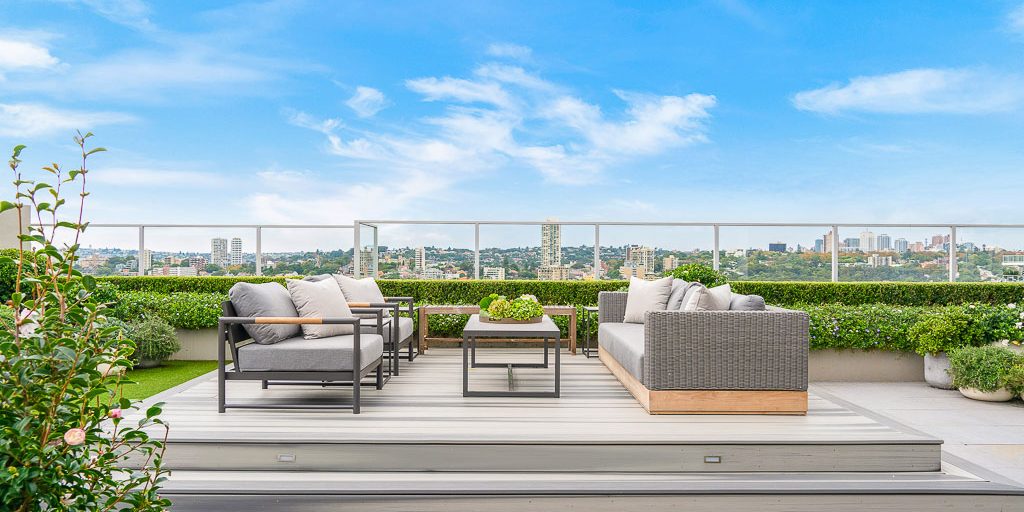
A well-designed balcony garden is more than a patch of green, it’s a purposeful extension of your living space, tailored for relaxation and connection. Whether your balcony is a modest city nook or a larger terrace, thoughtful planting, smart materials, and subtle enhancements can make it a place you genuinely want to spend time. At Space Landscape Designs, we specialise in transforming underused balconies into beautiful outdoor retreats that feel both practical and personal. Ready to make the most of your balcony? Discover creative ideas and proven strategies for designing a space garden that truly works for you.
Key Highlights
- Define clear goals and intended uses to guide your balcony garden’s design and features from the start.
- Utilize clever layouts, built-in seating, and integrated planters to maximize space, comfort, and visual flow.
- Choose plants that thrive in your specific balcony conditions by considering sun, wind, and orientation.
- Maintain privacy using screens and layered planting while ensuring light and airflow for a balanced space.
- Layer textures, select quality materials, and incorporate vertical planting and edible herbs for a dynamic, personal retreat.
Designing Balcony Gardens: Setting Goals for Your Space
Before you start creating balcony gardens, it’s essential to clarify your goals and how you want your balcony garden to function. Every well-designed garden, even on a balcony, begins with purpose. Whether you’re aiming for a lush retreat, a compact escape to read, a mini herb garden for your cooking, or an entertaining nook, defining outcomes will guide the design from the outset. I always ask my clients to envision how they’d like to use their balcony throughout the week. Will you start your day with coffee among greenery, host friends for sunset drinks, or simply want a slice of abundant nature to soften the city’s edges?
The abundance you can achieve in a limited space is all about careful planning. Rather than trying to squeeze in every plant or furniture piece, focus on quality over quantity. Consider if having built-in seating or integrated planters will give your balcony a tailored feel or if leaving more open space will make the garden more inviting. Every balcony is different, some call for a planting-led approach, others for flexible layouts you can adapt seasonally. Thinking about how visual flow connects the indoors and outdoors is key; the best balcony designs draw the eye outside, making the whole living area feel larger and brighter.
Selecting a style or mood at this early stage will help you prioritize, whether you want your balcony to feel wild and leafy, crisp and architectural, or a blend of both. Take the time to consider practical realities, like how often you can tend the garden and whether you want low-maintenance solutions. Setting these clear intentions at the beginning streamlines the process, so every decision, from materials to plant choices, feeds back into your vision. That’s how you can ensure your balcony is more than just an add-on, but a true extension of your home, designed for how you want to live and relax outside.
Maximizing Every Metre: Clever Layout Solutions for Any Balcony
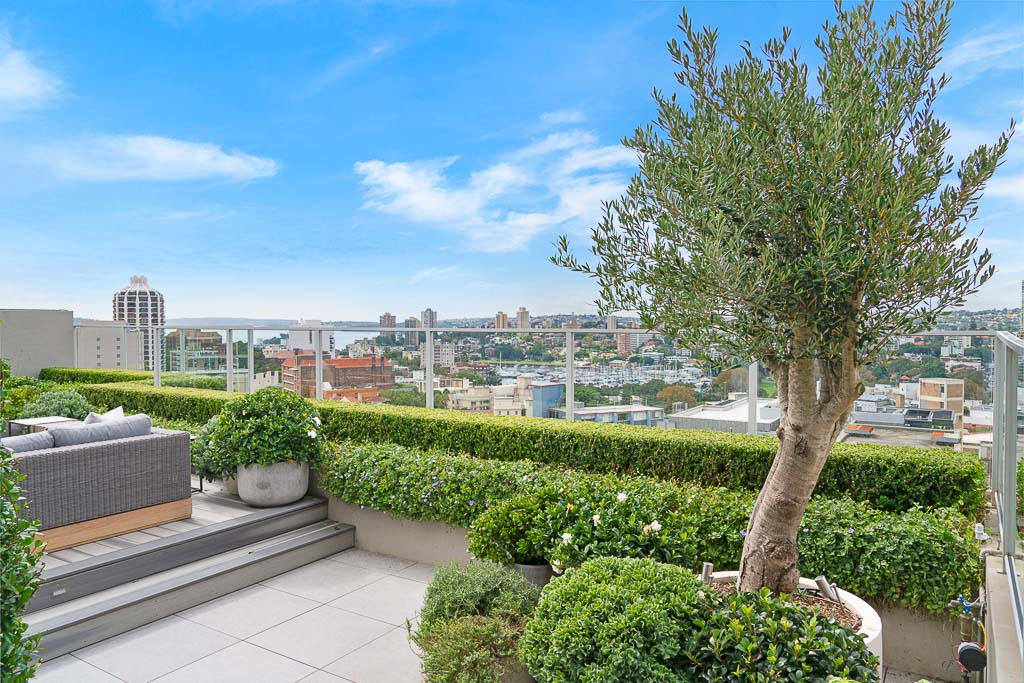
Turning a small balcony area into a well-resolved balcony garden doesn’t mean sacrificing comfort or style. Success comes from embracing clever layout strategies that extract the most from every available metre without letting the space feel forced or congested. Careful arrangement of small garden features, built-in planters, and multi-purpose elements like seating is essential to cultivating both usability and visual harmony. Plants, pots, and textured materials work in tandem to add life and variety while preserving openness. With the right design approach, even the most modest balcony can support a lush range of gardens container ideas, each feeling cohesive, welcoming, and distinctly yours.
Integrating Built-In Seating, Planters, and Lighting for Seamless Function
When I design balcony gardens, the challenge isn’t just fitting everything in, it’s about ensuring the balcony feels harmonious, open, and liveable. In small spaces, well-considered built-in seating is the backbone of flexible layout. Rather than bombard the balcony with standalone furniture, built-in benches double as social zones and discreet storage, keeping the core of the space tidy and inviting. I’ll often specify timber for these, its warmth and tactile grain offset the harder lines of concrete or steel that dominate many balcony areas and lend a sense of crafted permanence to the garden’s container elements.
Pairing built-in seating with integrated planters creates a seamless visual rhythm. The edge of a bench can become the foot of a lush gardens container, allowing layering plants to spill over the seat, blurring the boundaries between furniture and greenery. Well-designed planters create continuity, uniting anchor pots or vertical elements along the balcony’s length. This layering delivers a greater range of textural contrast without overwhelming the footprint, succulents, grasses, and slender shrubs can be arranged in thoughtful clusters to conjure depth and interest.
Subtle lighting is the final piece that transforms a nighttime balcony into a true retreat. Discreet, low-voltage lighting built beneath seating or tucked within planters brings the balcony to life after sunset, accentuating the forms and layers created during the day. Lighting doesn’t just aid navigation; it evokes mood and extends usability beyond daylight hours, ensuring this balcony area remains a beloved extension of your living space. With pots chosen for form and function, and strategic placement of planters to create structure, every inch of the balcony is put to work, without ever feeling cramped. This is the art of designing small garden spaces for real life: it’s all about layering, texture, and making the most of the range of products and design choices available, regardless of the balcony’s size.
Understanding Your Balcony’s Conditions: Light, Wind, and Orientation
Every successful balcony garden begins with understanding the unique conditions your space is exposed to daily. The interplay between sun, wind, and your balcony’s orientation sets the parameters for plant selection, layout, and even the longevity of materials. Before putting any plants or features in place, it’s essential to observe how the light shifts through the day, how wind channels across balconies at different heights, and how these elements interact with the neighbouring architecture. I always encourage clients to spend time on their balcony, morning, midday, and evening, to notice where sun hits hardest, where shadows linger, and how strongly the wind moves. These insights ensure that design decisions aren’t simply aesthetic but adapted to the way the space truly functions and lives. Factoring in these variables forms the bedrock for a low-maintenance, thriving garden that feels integrated and resilient year-round.
Selecting Resilient Plants That Suit Your Specific Environment
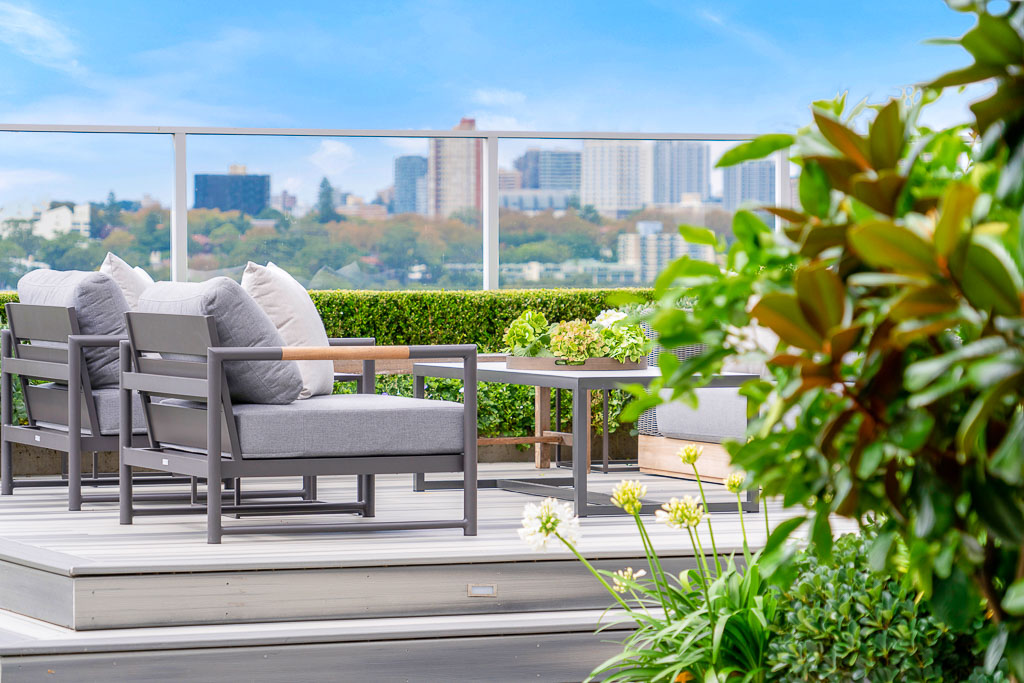
Choosing the right plants for your balcony garden is more an exercise in observation and honesty than in following trends. There’s little point in planting something destined to struggle in your balcony’s specific microclimate. If your balcony faces north or west, it’ll bask in generous sun for much of the day, demanding plants that thrive in bright, exposed conditions. Think succulents, grasses, and Mediterranean herbs, rosemary and lavender, each revels in heat and can handle hours of direct sun. South-facing balconies, by contrast, experience less intense sunlight, so ferns, philodendrons, and shade-loving natives become the driving force in your planting palette. East-facing spaces benefit from gentle morning sun, ideal for soft-leaved plants that dislike scorching afternoons, while west aspects call for species that can weather the prolonged late-day glare and wind.
Wind presents its own challenge, especially for upper storey balconies. Constant exposure can stress plants, dry out soil, and even cause physical damage. To buffer the wind, embrace hardy, flexible species, lomandra, dianella, or strappy cordylines. Their resilient structures hold up in exposed spots and create much-needed movement and texture. Layering plants thoughtfully builds natural protection, blending taller screening species at the perimeter with lower, denser varieties toward the centre. That’s how you maintain airflow while defending softer foliage from the brunt of the breeze.
To give all these plants the right environment to thrive, never underestimate the importance of a high-quality potting mix. An organic-rich, free-draining mix will anchor roots, retain enough moisture for sunny and windy spots, and set up your balcony garden for lasting health. A mix that drains too fast leaves plants gasping for water; one that’s too dense can suffocate roots, especially in areas with less sun. Opt for potting mixes calibrated for the types of species you’re growing, and always use containers with sufficient drainage to prevent root rot.
All these plant and soil decisions are founded on the lived realities of your balcony’s orientation and conditions. You want to choose plants for how they look, yes, but above all, for how comfortably they’ll live and grow, given the balcony microclimate. That’s the difference between a balcony garden that merely survives, and one that flourishes: it’s about respecting the relationship between sun, wind, plants, and the way you live among them. Start by knowing your site, then select resilient species supported by the right organic potting mix and clever layering, your balcony will reward you in turn.
Creating Privacy Without Sacrificing Light and Airflow
When you’re creating a balcony garden, privacy tends to top the wish list, especially in dense urban settings where neighbouring apartments sit just metres away. However, the best balcony gardens don’t turn the area into a closed-off box. My approach always respects the need for light and airflow, two essentials for both plant health and the overall ambience of a balcony garden. Using strategic design, you can achieve privacy while keeping a natural flow and a luminous, breathable atmosphere.
The secret lies in selecting the right screens and layering. Rather than solid barriers that cut off your view and block breezes, I recommend openwork balcony screens in powder-coated steel, slatted timber, or patterned composite materials. These forms filter sightlines for privacy but let sunlight and air pass freely, preventing the balcony from feeling stifling. Planting alongside screens further softens their appearance and enhances both the garden and balcony’s privacy without sacrificing openness. By choosing upright grasses or strappy foliage, like lomandra or dianella, you create a green veil that ebbs and flows with the breeze, sustaining airflow and adding natural texture to the balcony environment.
Think about combining texture at every level: a timber screen behind trailing garden plants, perhaps with climbing jasmine weaving through, amplifies privacy while casting dappled light. The interplay of green against raw or matte surfaces means the space never feels harsh or monotonous, and airflow stays intact through the layers. Remember, the goal is not to create a fortress but a refuge, balancing privacy, light, and that signature garden sense of invitation. Keep an eye on the orientation, screens can be placed only where needed, letting the garden draw in optimal daylight while offering you quiet seclusion.
If privacy is critical for your lifestyle, don’t reach for a quick fix. Even simple lattice or mesh, when combined with considered balcony planting, does more than any heavy wall. Let your garden evolve as a sanctuary, private, certainly, but always bright, textured, and open to gentle Sydney breezes. Need help creating this balance for your own garden? A tailored garden design ensures every element serves privacy, airflow, and light, crafting a space that feels resolved and quietly protective at any hour.
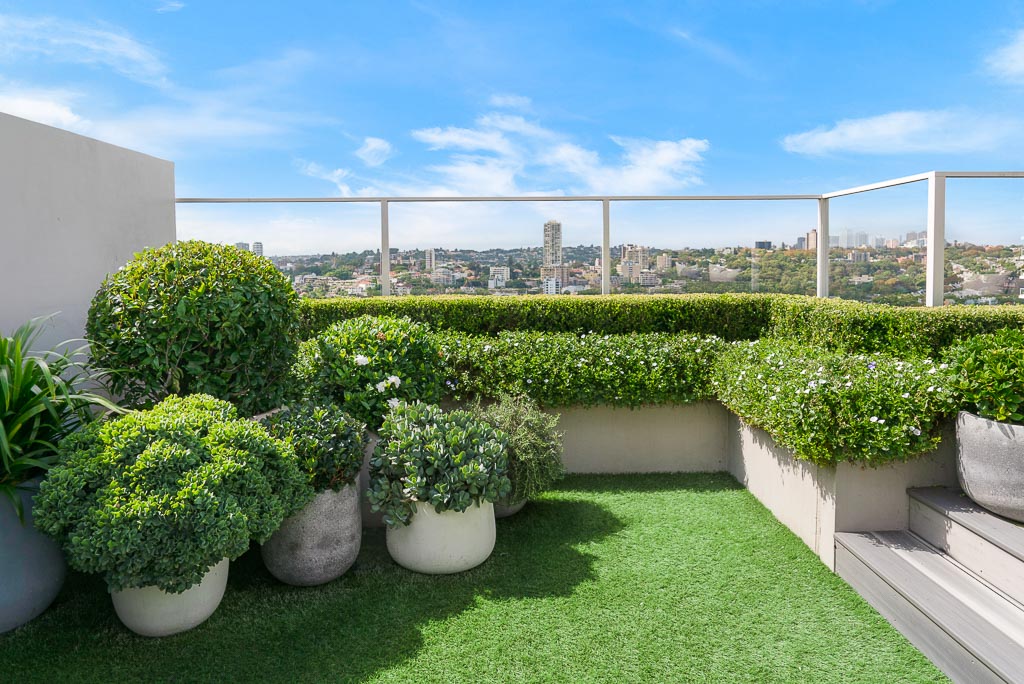
Synthetic lawn on Balcony Garden
Texture and Material Choices to Soften Urban Balcony Spaces
Urban balconies can easily feel stark or impersonal with their concrete slabs, metal rails, and hard edges. For me, nothing grounds a balcony and invites daily use more than thoughtful layering of textures and a deliberate choice of material. If you’re aiming to soften your outdoor space – to create an atmosphere that feels lived-in, calm, and truly an extension of your home – every detail matters. Integrating warm timber, for example, instantly offsets the chill of urban materials such as exposed steel and glazed surfaces. It’s not just about looks either; timber brings a tactile quality underfoot or as part of built-in bench seating, and acts as the visual connective tissue between plant life and the manmade elements around it.
Designing for small balconies means making every texture pull its weight in the overall scheme. Layering plants – mixing botanicals with contrasting heights, foliage size, and colour – adds depth and movement, transforming a narrow space into something dynamic and atmospheric. Greying eucalyptus leaves against the matte grain of timber, or the glossy sheen of cordylines tumbling near textured fibre-cement planters, all contribute to that lived atmosphere you want to return to. Adding woven screens, stone pebbles, or natural-finished pots lets your chosen textures echo the balcony’s architectural lines while softening the overall vibe. Each material choice must feel intentional and resolved, never like a random afterthought.
What I’ve found essential, too, is balancing the range of materials and textures so the space feels coherent. Too many competing materials can leave the space feeling cramped, not calm. If you keep your palette simple – perhaps timber and two other complementary textures – you’ll achieve a layered, resolved look that elevates even the most compact urban balcony. The goal is not just to soften but to make the space live beautifully and comfortably, blending design with usability. Considering atmosphere at every turn, from surface to plant layering, is the key to a garden that feels considered and inviting. If you’re preparing to renovate your own space, start by focusing on material harmony and texture – it’s the surest way to create a garden you’ll want to live in every day.
Garden Ideas for Small Garden Transformations on Balconies
Transforming a balcony into a small garden is about seeing potential where others see constraints. The right garden ideas can pull even the tightest balcony into focus, drawing on layering, considered planting, and smart use of feature pots. When you approach balcony gardens through the lens of transformation, focus on vertical planting, lightweight pots, and textured screens to turn walls and railings into living, abundant surfaces. Visual impact comes from layers, not just planting at ground level, but using screens and vertical features to guide the eye and maximize sun and shade alike. These principles help every balcony, regardless of size, gain presence, calm, and that sought-after sense of abundance.
Vertical balcony, Screens, and Feature Pots for Visual Impact
When designing balcony gardens, one of my guiding principles is to never settle for a one-dimensional layout, your balcony’s limits are its invitation to get creative. Vertical planting transforms a plain wall or balustrade into a living canvas, making the most of limited floor space by drawing the eye up and layering foliage at multiple heights. Living walls, trellises, and wall-mounted planters are all fantastic garden ideas for giving a small garden that sense of abundance without cramming it with too many pots at ground level. Consider weaving trailing greenery, such as ivy or jasmine, up wire screens or modular panels. This not only delivers visual impact but also softens hard lines, creating a garden that feels lush and lived-in while still letting sunlight dance through.
Screens themselves are key design elements, doing more than providing privacy, they define zones, organize planting, and establish a layered rhythm. Perforated metal, timber slats, and mesh all have their place, allowing you to balance enclosure and openness. The interplay between sun and shadow on a well-placed screen amplifies the balcony’s atmosphere, especially as the day unfolds and the garden comes to life. By placing screens against the boundary, you can support climbing plants or simply use the pattern itself as a feature, adding depth and structure that supports both bold design intent and casual relaxation.
Pots and especially feature pots act as sculptural anchors for your small garden. Oversized or uniquely shaped vessels ground the design, helping to organize space and catch the eye. Cluster pots in odd numbers for an informal look, or line them up for a more structured, architectural approach. Use layering plants, tall grasses at the back, mid-sized sculptural forms, and spilling groundcovers at the front, to create depth and a dynamic silhouette. This technique is essential not only for aesthetics, but to ensure each plant basks in its ideal share of sun or shade. Selecting pots that reflect your palette, timber, stone, or sleek composite, ensures consistency with your balcony’s material story, so nothing ever feels out of place.
Above all, the secret to abundance on balconies isn’t just about volume but about composition. Smartly placed screens give climbing plants something to live on, while feature pots and vertical planting work together to deliver true transformation. With care and intent, you can turn a modest balcony into a garden that feels generous, resolved, and fully designed for the way you live. If you’re feeling unsure, experiment with movable pots and reconfigurable screens, adapting as your needs and the sun shift, so your garden can always be as dynamic as your city lifestyle.
Gardening ideas: Incorporating Edible Elements
The beauty of a well-designed garden is its ability to elevate daily living, and there’s nothing quite as rewarding as harvesting edible produce right outside your door. Introducing herbs and other edible plants into a balcony garden isn’t just practical, it infuses the space with scent, texture, and a healthy vibrancy. I’ve seen even the most compact balconies in Sydney thrive when thoughtful herb planting is woven into the design. By focusing on the right species and creating the ideal growing environment, you can make your garden as delicious as it is beautiful.
When selecting herbs, consider not only your cooking habits but also your balcony’s unique conditions. Mediterranean varieties such as rosemary, oregano, and thyme are wonderfully resilient and relish the sun-drenched, breezy character common to many city balconies. Parsley, mint, and chives are more forgiving about shade and can handle a partly sheltered spot. For those passionate about organic growing, always opt for premium potting mix enriched with organic matter. High-quality mixes support healthy roots and ensure your edible plants stay robust, offering fresh leaves for months on end. It’s a small investment that pays dividends in the flavour and quality of your produce.
Growing plants in pots gives you the flexibility to rearrange your edible garden as conditions and seasons change. I recommend mixing upright herbs like basil or sage with trailing varieties such as thyme or marjoram alongside the edges of containers, maximizing visual interest and yield. Efficient watering is critical, balcony gardens are prone to soil drying faster than ground-level gardens, so monitor moisture closely and use pots with adequate drainage. Grouping pots assists in retaining humidity and regulating temperature, contributing to healthier growth. Remember, herbs are happiest when harvested frequently, which encourages bushier, more productive plants.
Don’t be afraid to experiment with vertical planters or railing baskets for even more growing space. These let you enjoy more edible abundance without crowding your balcony floor. By carefully integrating herbs and edible produce into your balcony garden, you’ll create a living pantry that’s deeply personal and endlessly useful, letting the line between garden and kitchen blur in the very best way. Thinking of incorporating more edible elements? Now is the perfect moment to add herbs to your urban retreat, transforming both your meals and your lifestyle through thoughtful balcony garden design.
Transforming your balcony into a beautiful garden is a journey of creativity and thoughtful planning. By carefully selecting plants, materials, and features that suit your space and lifestyle, you can create an inviting retreat that enriches your everyday living. If you’re ready to get the most out of your balcony, we’re here to guide you every step of the way. Reach out to Space Landscape Designs for expert advice or a custom design, let’s turn your vision into a green oasis that will make you smile every time you step outside.
Some of our balcony projects:
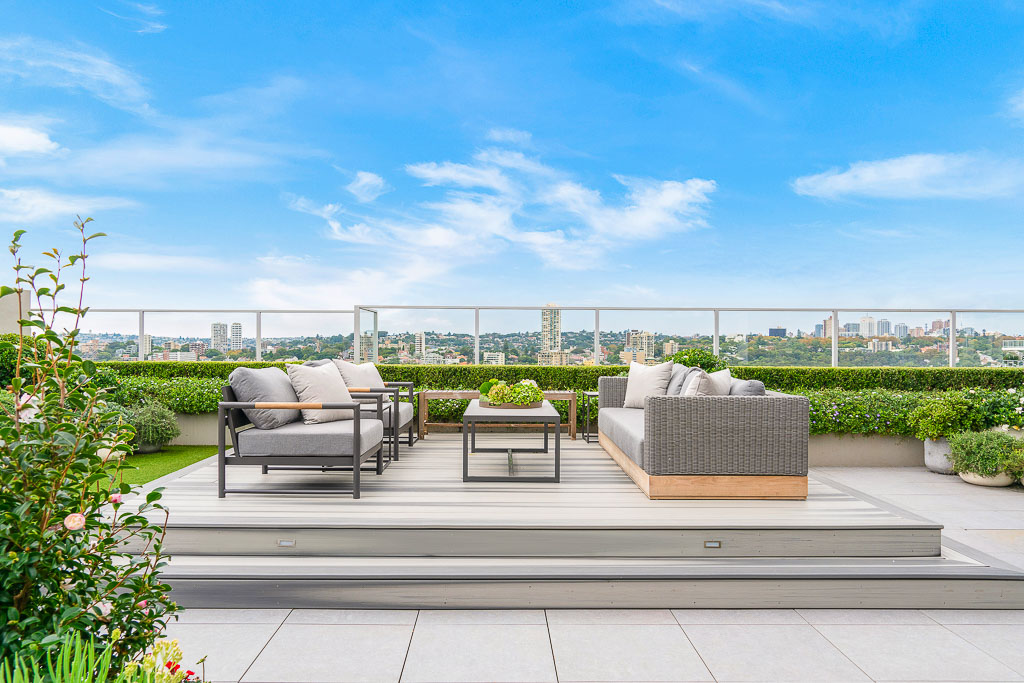
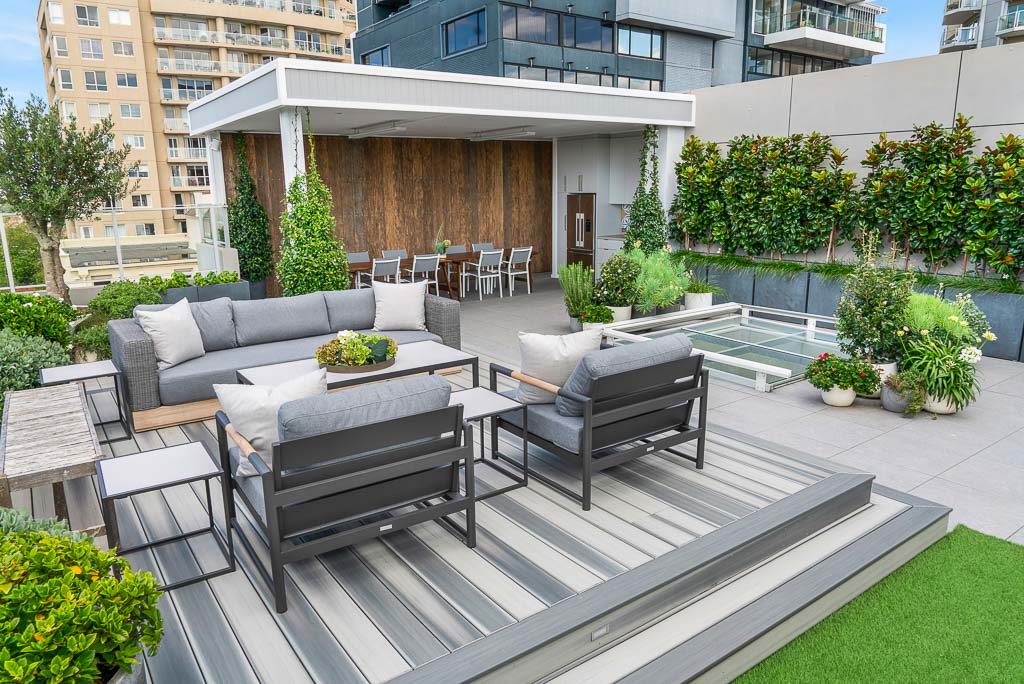
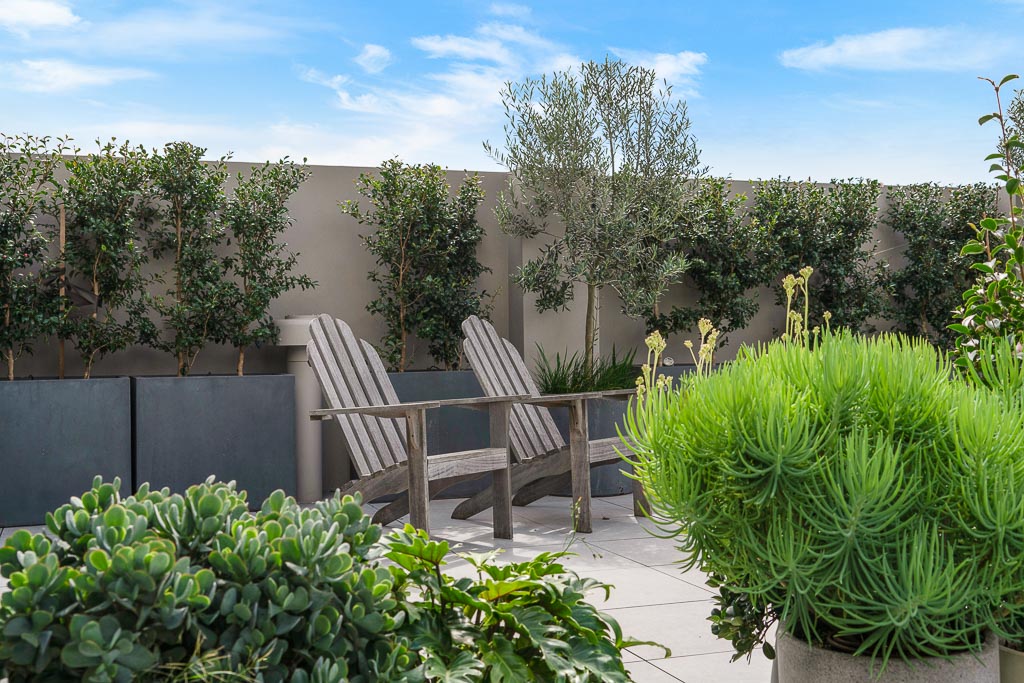
Potts Point Luxury Balcony
Where: Potts Point
The Challenge: Elevated building heights generate unpredictable wind conditions throughout the premises.
Our Fix: Our solution for wind protection included creating built-to-order garden containers loaded with strong coastal plants rosemary and coastal banksia and lomandra. The balcony protection includes green walls which help block wind while an elevated seating section provides open view access.
Balcony Garden FAQs
How do I choose plants for a balcony garden in Sydney?
Match plants to your balcony's aspect and wind exposure rather than choosing on looks alone. North-facing Sydney balconies suit sun-lovers like rosemary, lavender and succulents, while shadier or wind-exposed spots do better with ferns, philodendrons, lomandra, dianella and cordylines. Spend a full day watching how light and wind actually move across the space before you plant — it saves you replacing dead pots a month later.
What's the best potting mix for balcony pots and planters?
Use a high-quality, organic-rich, free-draining potting mix, not garden soil, which compacts and drowns roots once it's stuck in a container. Free drainage matters even more on a balcony than in a garden bed, because excess water has nowhere to go except pooling against the waterproofing membrane. Fibre-cement or lightweight composite planters paired with a quality mix also keep the overall load on the slab lower.
How do I create privacy on an apartment balcony without blocking light?
Use perforated metal or mesh screens, slatted timber battens, or a living wall of climbers like jasmine or ivy, rather than a solid wall that blocks both airflow and light. Trellises with climbing plants filter views while still letting breeze and sun through. Grouping tall planters (cordylines, banksia) at strategic points adds privacy too, without making the balcony feel fully closed in.
Do I need strata approval for a balcony garden in Sydney apartments?
Often yes. Most Sydney strata schemes require by-law approval before you fix screens, trellises, irrigation or heavy planters to balcony structures or common property. Waterproofing membranes under balcony tiles are also easily damaged by drilling or by excess pooled water, so check your strata by-laws and the building's waterproofing detail before installing anything permanent.
Balcony planters vs built-in garden beds — which is better for small spaces?
Freestanding planters are cheaper, flexible and reversible, which makes them the safer default on rented or strata-managed balconies. Built-in seating and planters integrate storage and structure into tight footprints and look more considered, but they're harder to change later and need council or strata sign-off. My starting point on most small Sydney balconies is well-chosen pots, adding built-ins only once the space and the approvals allow it.
How much does it cost to design and fit out a balcony garden?
Planters and access drive balcony costs, not plants. Custom joinery or large lightweight planters usually account for the largest share, and getting them onto the balcony can cost more than making them — lift access versus stairs versus high-rise cranage makes a real difference to the final number. Irrigation and low-voltage lighting add cost but cut down on plant replacement, which matters on windy, exposed balconies.
What plants survive a windy, north-facing balcony?
Mediterranean and coastal-hardy species handle sun and wind together best — rosemary, oregano, thyme, lavender and banksia are naturally resilient to heat, salt air and constant airflow. Grouping pots together helps retain humidity and moderate temperature swings, which takes some of the water stress off wind-exposed foliage. Succulents are a reliable low-water backup for the hottest, most exposed corners of the balcony.
Is it worth hiring a landscape designer for a small balcony?
Yes, particularly for balconies with structural, drainage or strata constraints, because a designer can get more out of every metre with layout, planting and lighting choices suited to your specific light, wind and orientation. Someone familiar with local strata rules and coastal microclimates, from the Northern Beaches to the Eastern Suburbs, can also flag waterproofing and load issues before they turn into expensive problems on site.